
- SMEs urged to embrace value addition for sustainable growth.
- Industry leaders cite Ksh3 trillion SME financing gap.
- Stronger value chains and market access seen as key.
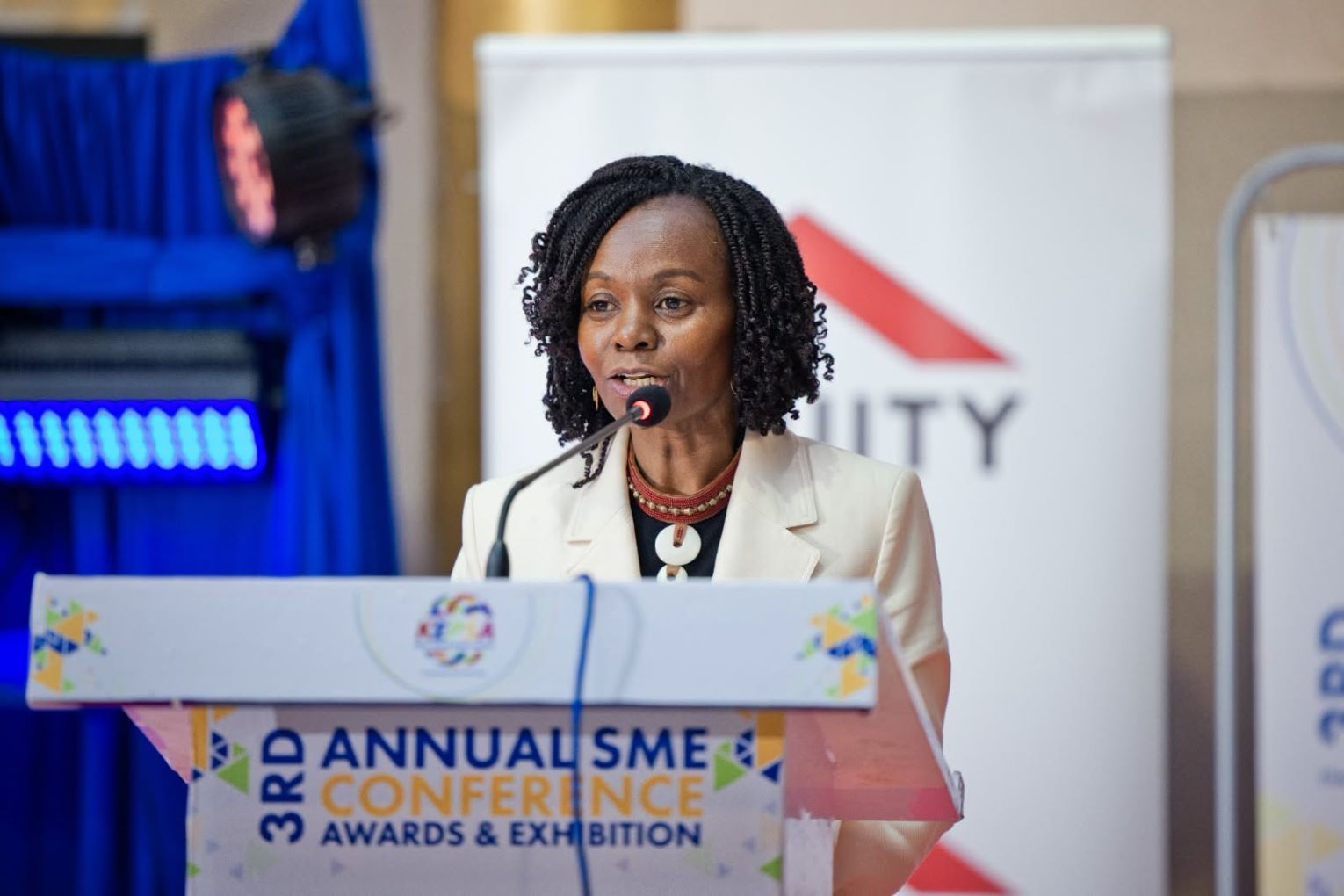
Industry leaders speaking at the Third Annual Small and Medium Enterprises (SME) Conference, Awards and Exhibition on July 23, 2026, encouraged SMEs to build value-added businesses, warning that the sector still faces a Sh3 trillion financing gap despite growing policy support.
Equity Bank Kenya Commercial Director Kagiso Moloi said accelerating SME growth will require stronger value chains, improved market access and financial solutions tailored to entrepreneurs.
“Our job as financiers is to walk that whole journey with them, from the first till number to the first export invoice,” he said. “A market is worth more than a loan. You can finance a workshop, but if nobody is buying, you only have a funded warehouse,” he added.
Moloi said the revised Micro, Small and Medium Enterprises (MSME) Policy 2026 estimates that Kenyan SMEs face a financing gap of about Ksh3 trillion, which can only be addressed through collaboration between government, financial institutions, development partners and entrepreneurs.
He added that value addition through processing, branding and product redesign presents a major opportunity to increase business earnings and competitiveness.
READ ALSO:
HFH Kenya launches housing campaign, boosts climate resilient homes for vulnerable families
Separately, Konrad-Adenauer-Stiftung (KAS) Kenya Programme Coordinator Victor Oteku urged policymakers to foster a business environment that supports innovation, formalisation and the adoption of emerging technologies.
“Innovation requires more than creativity. It requires supportive policies, access to finance, strong institutions, vibrant markets and collaboration,” he said, adding, “Our responsibility is to make sure that MSMEs are not left behind in this transformation.”
Oteku urged the government to ease regulatory barriers and provide incentives for SME formalisation. He also called for greater investment in artificial intelligence, stronger institutions and collaboration between government, academia and the private sector to enhance business resilience and global competitiveness.
Speakers agreed that building stronger value chains, expanding access to affordable finance and creating a more supportive policy environment will be essential for Kenya’s SMEs to transform into sustainable businesses capable of creating jobs, boosting exports and driving inclusive economic growth.
By Bernard Magada
Get more stories from our website: Sacco Review.
For comments and clarifications, write to: Saccoreview@
Kindly follow us via our social media pages on Facebook: Sacco Review Newspaper for timely updates
Stay ahead of the pack! Grab the latest Sacco Review newspaper!