
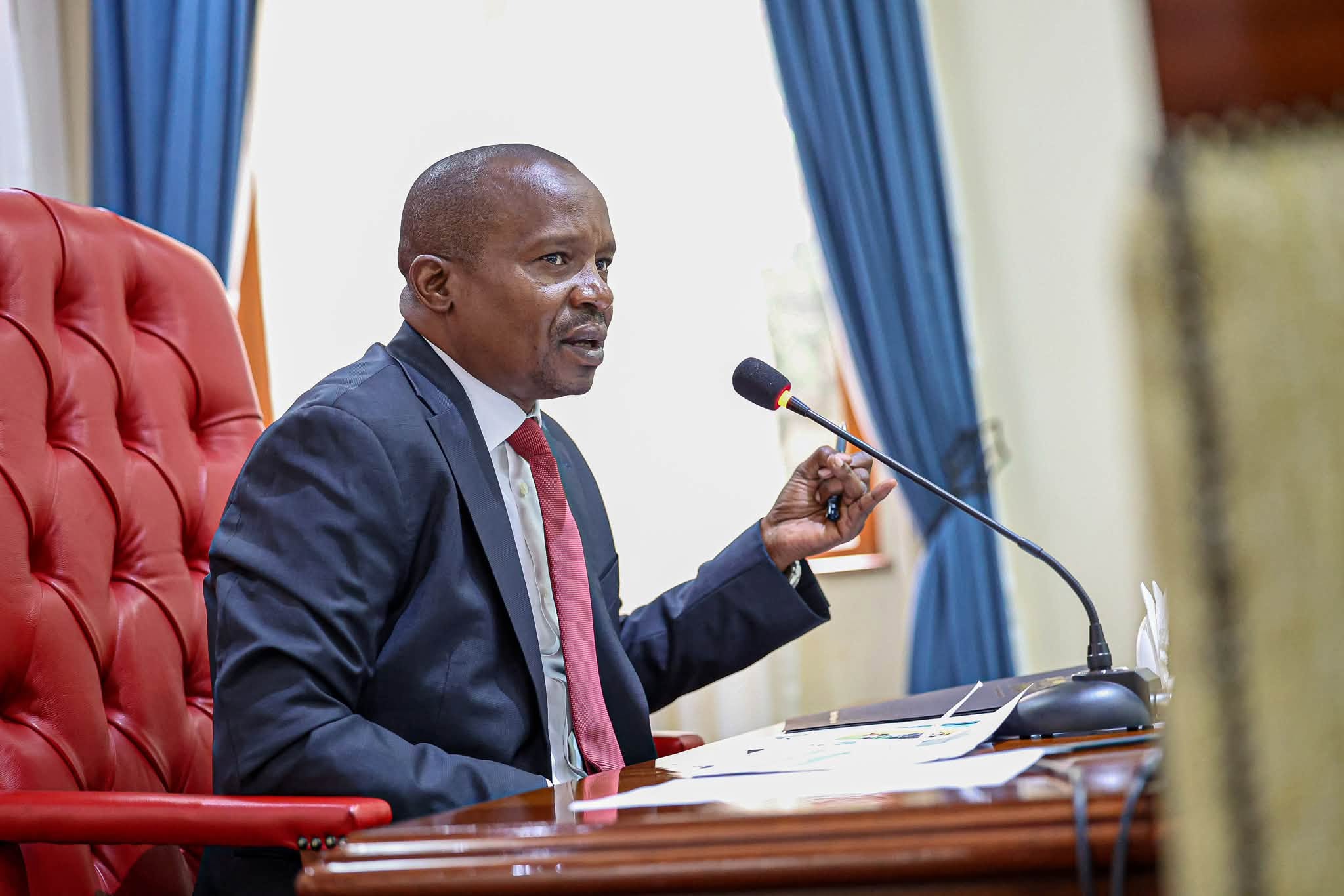
- Government says agriculture reforms have lowered input costs and improved farmer productivity.
- Farmer registration has expanded as Kenya pushes reforms across key agricultural value chains.
- Agro processing and smart farming are emerging as the next priorities in the sector.
Deputy President Kithure Kindiki has defended the Government’s agriculture reforms, saying measures implemented over the past four years have lowered production costs, boosted output and made farming more profitable for millions of Kenyans.
Speaking during the official opening of the Agriculture and Food Security Transformation Summit at Jamhuri Park ASK Showground in Nairobi, Kindiki said agriculture had been deliberately placed at the centre of Kenya’s economic transformation.
Kindiki said the Government had expanded the national farmer registration system from about 300,000 farmers in 2022 to more than eight million currently, comprising 7.2 million crop farmers and three million livestock keepers.
He said the reforms had also focused on cutting the cost of farm inputs, with fertiliser prices falling from Ksh7,000 to Ksh2,000 per bag.
“Certified maize seed price has fallen by 50% from Ksh300 to Ksh150 per kilogramme,” Kindiki said, adding that the price of sexed semen for dairy cows had also dropped from Ksh8,000 to Ksh1,400 per dose.
The Deputy President said the interventions had contributed to higher production across several agricultural value chains, including maize, sugar, oil crops, dairy, coffee, tea and horticulture.
“There is evidence of significant progress. Maize production has increased, while maize imports have declined substantially,” he said.
He added that Kenya had also reduced its dependence on imports of commodities such as rice and sugar, while production of sorghum, rice, potatoes, avocado and maize had increased.
ALSO READ:
In the dairy sector, Kindiki said milk production had risen from 4.6 billion litres to 5.2 billion litres, with the value of dairy exports increasing from Ksh4.9 billion to Ksh9.4 billion.
He said meat export earnings had similarly grown from Ksh8.9 billion to Ksh12.9 billion, while enhanced livestock vaccination was being used to strengthen animal health.
So far, 8.9 million cattle have been vaccinated under a programme targeting the country’s estimated 22 million cattle and 50 million small stock.
Kindiki also pointed to the growth of agro processing as the next frontier in agricultural transformation, saying 17 County Aggregation and Industrial Parks (CAIPs) were being prepared for opening.
“Our milk should become dairy products. Our fruits should become processed foods and beverages. Our coffee should be roasted, packaged and branded in Kenya,” he said.
The Deputy President said the Government was also turning to technology to improve productivity, particularly through smart and precision agriculture.
“I am very happy to see technology being applied in our farming, the world is moving towards smart farming and I have seen a lot of technology,” Kindiki said.
He cited drone technology as one of the tools that could enable farmers to apply fertiliser and pesticides more precisely instead of treating entire fields indiscriminately.
“That is the future of agriculture where you apply fertiliser and pesticides to the crop that requires that input and not to apply everywhere,” he said.
Kindiki said research and innovation had also been stepped up, resulting in new crop varieties, improved animal breeds and better farming technologies.
The three-day summit is set to bring together national and county governments, farmers, private sector players and development partners to assess the progress made in agriculture and agree on the next phase of transformation. The first day is focused on taking stock of what has changed under the Government’s Bottom-Up Economic Transformation Agenda (BETA).
Kindiki said the ultimate measure of the reforms should be whether farmers were earning more and gaining greater control over their produce.
“Our commitment under BETA was not simply to produce more food. It was to change the economics of farming,” he said.
The summit is expected to focus on food security, value addition, digital agriculture, financing, productivity and stronger markets as Kenya seeks to reduce food import dependence while creating more jobs and improving farmer incomes.
By Lizzy Aluga
Get more stories from our website: Sacco Review.
For comments and clarifications, write to: Saccoreview@
Kindly follow us via our social media pages on Facebook: Sacco Review Newspaper for timely updates
Stay ahead of the pack! Grab the latest Sacco Review newspaper!