
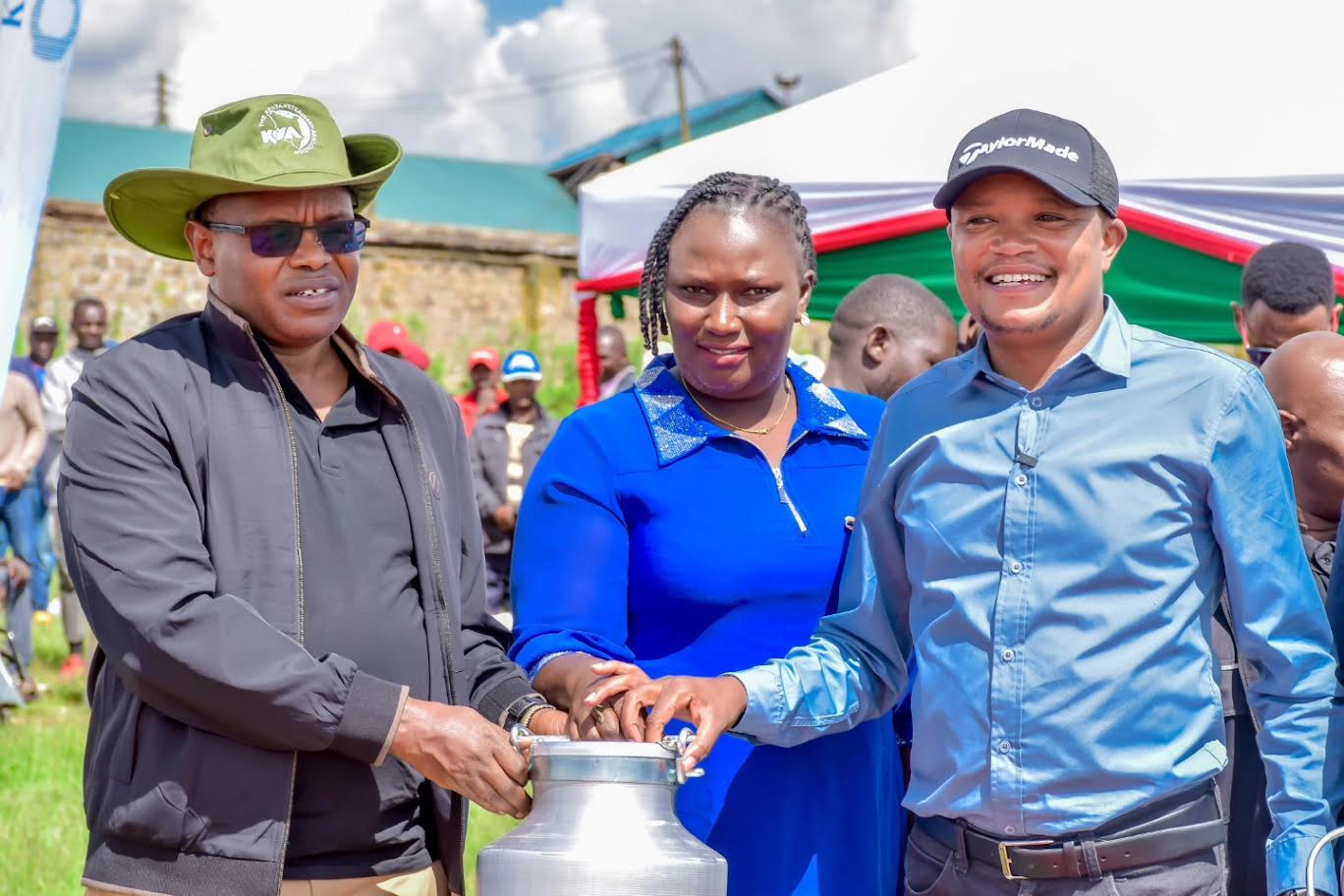
Molo dairy farmers have been urged to embrace modern technology to boost productivity, improve animal welfare, and enhance efficiency
Speaking in Molo town during the dairy farmer’s field day, Molo Member of Parliament (MP) Kuria Kimani noted that Kenya imports an average of 45 million liters of milk annually, urging farmers to capitalize on the huge potential in modern dairy farming which requires small space and proper management to realize real profit.
He called upon both national and county governments to intensify farmer education on modern technology and employ more extension officers to help give impactful skills to farmers to boost dairy production to cut down on the cost of importing milk.
“I would like Molo dairy farmers to embrace Technology so that they can shift from producing 2 liters a day per cow to over 30 liters. Modern farming techniques will lead to producing high-quality milk easier, faster and more sustainably than ever before,” said MP Kuria.
He added that modern technology in dairy farming, including automated milking systems (AMS), wearable sensors, and herd management software, boosts productivity, improves animal welfare, and enhances efficiency. Key advancements like precision feeding and AI-driven breeding help farmers reduce costs, manage large herds, and increase milk yields.
The sentiments were echoed by Kenya Dairy Board acting director Paul Ndugu and Beth Mbuthia who called on dairy farmers to embrace value addition on their milk and ensure hygiene of the milk for quality production.
ALSO READ:
Oparanya rallies Western Kenya counties to form SACCOs, revitalize coffee farming
“Nakuru County now produces an average of 400 million litres of milk annually, an improvement of over 25% since 2020 making it the third leading devolved unit in milk production in the country with 381,600 dairy cattle after Kiambu and Murang’a counties.
This has been made possible through sustained empowerment by processors such as New KCC and Brookside Dairy Limited through training on good dairy practices that encourage growth in milk volumes,” said director Ndugu.
“Through this training, we are urging farmers to upgrade their local breeds through artificial insemination. This can be attained with support from both levels of government and other stakeholders. In Nakuru county at large over 7,000 farmers have used superior semen from approved bulls to serve cows so that the subsequent generation is improved to pedigree breed.” he added.
ALSO READ:
Women gaining ground in SACCO senior management, though CEO representation declines: SASRA report
Director Mbuthia urged farmers to join the cooperative movement which is fully adopted in the daily subsector. This will enable them to get rid of costly transporters, and thus get more share of the producer price paid by processors.
“A co-operative mode will enable Kenya to modernize its dairy sector where farmers will be compelled to sell milk via dairy societies that also become channels for quality monitoring, credit access as well as dairy husbandry training,” said Mbuthia.
Farmers led by, Joyce Mbugua, lauded the MP and Kenya dairy Board for the impactful training which boosted farming techniques among the farmers besides increasing the milk production rate.
By Juma Ndigo
Get more stories from our website: Sacco Review.
For comments and clarifications, write to: Saccoreview@
Kindly follow us via our social media pages on Facebook: Sacco Review Newspaper for timely updates
Stay ahead of the pack! Grab the latest Sacco Review newspaper!