The Savings and Credit Co-operative Organisation (SACCO) is gunning towards a trillion disbursements as at December 2025.
According to Sacco Societies Regulatory Authority (SASRA), the sector received Ksh125.7 billion in the year 2024.At the same time, the amount Kenyan Sacco sector disbursed across the country exceeded Ksh900 billion by December 2025.
In addition, the data from the regulator indicates that land and housing remains the leaders in disbursement, and the concentration has been documented across all quarters.
The regulatory body further revealed that the sector received Ksh125.7 billion in credit, down from Ksh Ksh138.5 billion in the same period the previous year.
The sector however closed last year with Ksh948.31 billion in gross loans compared to Ksh842.80 billion from the previous year.
The report noted that Deposit Taking (DT- Saccos) closed the year having disbursed Ksh840.5 billion compared to Non-Withdrawable Deposit Taking Saccos (NWDT), which stood at Ksh107.64billon.
The preliminary figures denotes that the total assets closed the year, at Ksh 1.2 trillion compared to Ksh1.08trillion as per December 2024, showing an improvement in asset growth and income.
ALSO READ:
Closure of Iranian Port of Salalah threatens Kenya’s tea export
Across, the four quarters nearly all disbursement of loans were done in the final two (September and December), with disbursement amounted to Ksh 99.57 billion recorded in months of March, Ksh113.79 billion in June, Ksh.131.79 billion, Ksh131.48 billion in September and Ksh135.48 billion in December 2025.
Accordingly to the report’s data, concentration was on land and housing with 28.72 per cent in September,
From the latest data, just like 2025 most Sacco members also sought financial support in the last half of calendar year 2024.
Disbursement stood at Ksh145.25 billion in September 2024 and Ksh154.75 billion in December 2024 compared to Ksh123.46 billion in March 2024 and Ksh119.28 billion in June 2023.
In quarter four ,as a majority of the allocations went on land , housing , agriculture followed with 21.01 % , education with 19.80 per cent , concentration on consumption and social services 8.42 per cent, finance, investment and insurance 4.89 per cent and human health 2.76 per cent , manufacturing and servicing industries 4.79 per cent .
Meanwhile women have been urged to prioritize saving, smart investment and investment in financial literacy as key tools for achieving economic independence and development
By OchiengD Ndiewo
Get more stories from our website: Sacco Review.
For comments and clarifications, write to: Saccoreview@
Kindly follow us via our social media pages on Facebook: Sacco Review Newspaper for timely updates
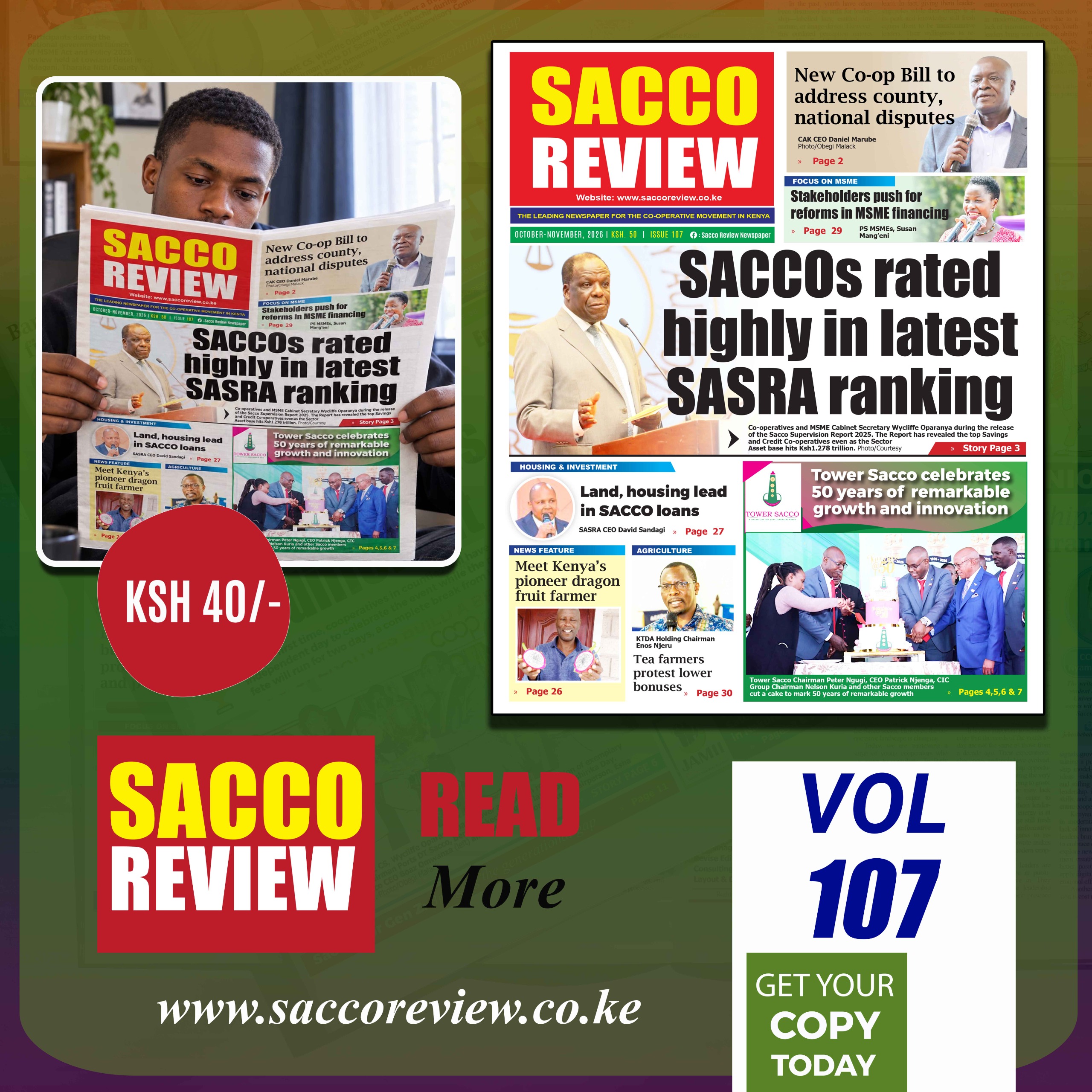
Stay ahead of the pack! Grab the latest Sacco Review newspaper!