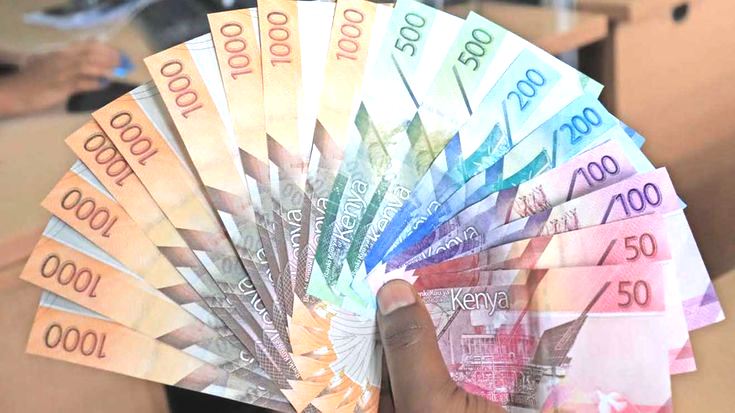
- Shilling remains stable against the dollar despite global pressures.
- Rising crude prices could push up Kenya’s fuel and transport costs.
- Inflation climbs as oil nears the $100 per barrel mark.
Kenya’s shilling is refusing to buckle against the US dollar, but a new threat is emerging from the global oil market that could hit fuel prices, transport costs and household budgets should crude prices cross the $100 mark.
The shilling strengthened marginally to Ksh129.43 against the US dollar on September 7, 2026, according to Central Bank of Kenya data, compared with Ksh129.47 on Friday and a weekly average of Ksh129.46. The movement may appear small, but it comes at a critical moment for the Kenyan economy, which remains highly exposed to international fuel prices and movements in global currencies.
The local currency also gained ground against the British pound, trading at Ksh174.89, down from a weekly average of Ksh175.32. Against the euro, however, the shilling slipped slightly to Ksh150.34, from Ksh150.30 previously. The Japanese yen recorded a larger movement, with 100 yen rising to Ksh82.91, compared with a weekly average of Ksh81.13. Across East Africa, the shilling traded at 29.19 Ugandan shillings and 20.47 Tanzanian shillings, compared with previous weekly averages of 29.14 and 20.43 respectively.
YOU MAY WANT TO READ:
One of the biggest reasons the currency has remained relatively stable is Kenya’s foreign exchange reserve position. CBK data showed that reserves stood at about $14.88 billion, equivalent to 6.1 months of import cover, as of September 3, significantly above the statutory minimum of four months of import cover.
The reserves give Kenya an important buffer when global markets become volatile and help strengthen confidence in the country’s ability to meet its external obligations. For consumers and businesses, a stable shilling can also offer some relief, since fuel, machinery, medicines, electronics and many industrial inputs are purchased in foreign currencies, particularly the US dollar. Therefore, a stronger or stable shilling can reduce the amount importers need to spend on these goods. However, there is another side to the story.
The $100 oil threat
The biggest danger now may not be coming from the dollar, but rather from crude oil. Brent crude climbed to about $97.47 per barrel on September 7, moving dangerously close to the $100 mark, while Murban crude also rose to $86.01 per barrel, from $81.78 previously.
The surge has been fuelled by concerns about global oil supplies amid renewed tensions involving the United States and Iran, alongside disruption around the strategically important Strait of Hormuz. For Kenya, this is particularly significant, given that the country imports most of its petroleum requirements. As a result, a sustained increase in international crude prices can quickly feed into domestic fuel costs.
When fuel becomes more expensive, the impact rarely stops at the petrol station. Higher fuel prices can increase the cost of public transport, trucking, food distribution, manufacturing, farming and electricity generation. Eventually, households feel the pressure through higher prices for everyday goods and services.
Inflation already on the rise
The oil shock comes as Kenya is already dealing with renewed inflationary pressure. Headline inflation increased to 6.6% in August 2026, from 6.5% in July. Core inflation also climbed to 3.4% from 3.2%, reflecting increased prices of selected consumer products, including beef with bones and fresh packeted cow milk. Non-core inflation offered some relief, however, falling from 15% to 14.7%.
Overall, the figures suggest that while the shilling is providing some protection against imported inflation, Kenyan households remain vulnerable to domestic and global price shocks.
A race between the shilling and oil
The Kenyan economy is now facing an unusual contest, with a relatively stable shilling, supported by foreign exchange reserves and limited currency market volatility, on one side. On the other is a rapidly changing global oil market that could undermine some of those gains.
The US dollar itself weakened by 0.25% during the week, according to CBK, offering some breathing room for emerging market currencies. Nonetheless, if crude oil continues climbing towards or beyond $100 per barrel, Kenya could face a fresh wave of imported inflation regardless of what happens to the shilling.
That is why the next few weeks will be closely watched by motorists, businesses, investors and policymakers. A stable shilling is good news, but if oil breaks through the $100 barrier and stays there, Kenyans could discover that currency stability alone is not enough to keep the cost of living under control.
By Hillary Muhalya
Get more stories from our website: Sacco Review.
For comments and clarifications, write to: Saccoreview@
Kindly follow us via our social media pages on Facebook: Sacco Review Newspaper for timely updates
Stay ahead of the pack! Grab the latest Sacco Review newspaper!