- Kenya pushes livestock traceability and digital disease surveillance to boost exports under the African Continental Free Trade Area (AfCFTA).
- African ministers pledge to harmonise trade standards, strengthen animal health systems and remove non-tariff barriers to grow regional livestock trade.
- Kenya urges a shift from live animal exports to value added livestock products and an integrated African livestock market.
Kenya has called for stronger traceability systems, digital disease surveillance and closer regional cooperation to expand the country’s livestock exports, as African ministers meeting in Addis Ababa, Ethiopia, pledged wide reforms to boost trade under the African Continental Free Trade Area (AfCFTA).
Kenya’s State Department for Livestock Development Principal Secretary (PS), Jonathan Mueke, told the meeting that the continent’s real opportunity in livestock exports lies not simply in beef but in building trust through quality assurance and science based systems.
He pointed to Kenya’s investment in digital disease surveillance, laboratories, animal identification and disease free zones as steps towards meeting international market standards.
“Africa’s livestock export opportunity is not simply beef. It is trust, trust built through quality, traceability, science and regional cooperation,” Mueke said.
He also urged African countries to move away from exporting live animals and instead build an integrated continental livestock market.
“Let us move from subsistence to commercialisation, from fragmented markets to one integrated African livestock market, and from exporting live animals to exporting premium African livestock brands,” Mueke said.
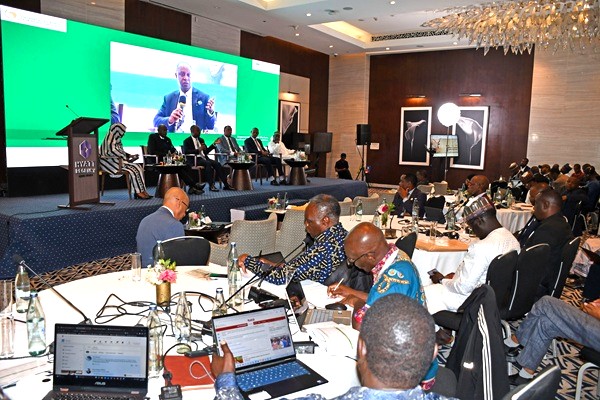
Kenya’s intervention came during the ministerial session of the first African Pastoral Markets Forum, which brought together policy makers, the African Union Commission (AUC), development partners, financial institutions, pastoral organisations and private sector representatives for three days of talks on livestock markets, regional trade corridors, financing, infrastructure and business opportunities.
ALSO READ:
Commercial banks overtake Saccos as farmers’ top credit source, CBK data shows
Ministers agreed that political commitment would determine the future of Africa’s pastoral livestock economy, and pledged to strengthen animal health systems, harmonise trade standards, expand livestock infrastructure and reduce non-tariff barriers to boost regional trade. They also committed to improving productivity and formalising livestock markets before the next forum.
Officials warned that Africa risks failing to realise the sector’s full economic potential unless governments remove trade barriers and modernise livestock markets.
The African Union’s Interafrican Bureau for Animal Resources (AU-IBAR) Director, Dr Huyam Salih, said Africa’s livestock potential would remain underused unless governments addressed fragmented markets, non-tariff barriers and weak support systems.
She called on governments to prioritise livestock market infrastructure, harmonise sanitary and phytosanitary standards, strengthen animal identification and traceability systems, and establish sustainable financing mechanisms to support livestock value chains across the continent.
ALSO READ:
KEPSA set to host third annual SME conference to boost business resilience
The African Union Commissioner for Agriculture, Rural Development, Blue Economy and Sustainable Environment, Moses Vilakati, said pastoralism should not be viewed as a marginal or subsistence activity but as a strategic economic system with strong potential for regional development.
He noted that pastoral economies depend on livestock mobility, rangelands, water resources, veterinary services, indigenous knowledge and cross border trade networks, all of which need stronger institutional backing.
“The challenge before us is not the absence of economic value. The challenge is how we organise, finance, govern and trade that value,” Vilakati said.
He urged governments to treat investment in water, animal health services, logistics and market infrastructure as essential production assets rather than social services. “Water is not only a social service, it is production infrastructure,” he said.
The Gates Foundation also stressed the urgency of strengthening Africa’s livestock sector, saying well functioning livestock markets are critical to improving nutrition, public health and reducing poverty across the continent.
Speaking on behalf of the Foundation, Tom Osebe said that although Africa holds a substantial share of the world’s livestock, it captures only a fraction of the value generated by the global livestock economy. He said efficient and inclusive livestock markets could raise household incomes and help more families afford nutritious food.
“Nutrition only reaches a child if that household can reliably access a functioning market,” Osebe said, calling for action rather than continued discussion of strategies.
By Bernard Magada
Get more stories from our website: Sacco Review.
For comments and clarifications, write to: Saccoreview@
Kindly follow us via our social media pages on Facebook: Sacco Review Newspaper for timely updates
Stay ahead of the pack! Grab the latest Sacco Review newspaper!