
- Del Monte Kenya supports an average of 19,820 jobs annually, with nearly 80,000 livelihoods sustained through its direct and indirect employment ecosystem.
- The company paid average annual wages of Ksh462,240 between 2015 and 2024, about 32 per cent higher than the formal private agricultural sector average.
- Its economic impact extends through transport, logistics, suppliers and service providers, making it a key contributor to Kenya’s agribusiness and export economy.
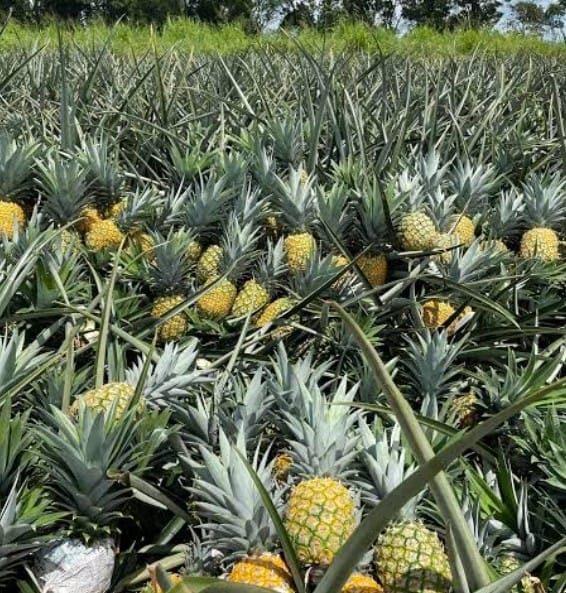
Del Monte Kenya exemplifies a quiet but profound contribution to Kenya’s economy. For decades, the company has remained one of Kenya’s most important agribusiness investors, not only producing world-renowned pineapples for international markets but also serving as a powerful engine of employment, rural development, and national economic growth.
Recent employment data paints the picture of a company whose footprint reaches tens of thousands of households across Kenya. Between 2013 and 2024, Del Monte Kenya supported an average of 19,820 jobs every year, comprising approximately 6,290 direct employees and another 13,530 jobs sustained through contractors, suppliers, transporters, service providers and other businesses connected to its operations.
Using Kenya’s average household size of four people, Del Monte’s employment ecosystem directly or indirectly supports the livelihoods of nearly 80,000 individuals annually. That is equivalent to sustaining an entire medium-sized town through one company’s continued investment and operational stability.
Perhaps the clearest demonstration of the company’s commitment to its workforce lies in employee remuneration. Between 2015 and 2024, Del Monte Kenya paid an average annual wage of approximately Ksh462,240, significantly outperforming the formal private agricultural sector average of Ksh351,029 over the same period. This places the company’s average wage at nearly 32 per cent above the industry benchmark.
READ ALSO:
Zoho partners with KNCCI to boost digital transformation for Kenyan SMEs
In a sector where low wages and employment insecurity have historically been persistent concerns, such a wage premium carries considerable social and economic significance. Higher incomes translate into improved household welfare, greater access to education and healthcare, increased savings, stronger purchasing power, and enhanced financial stability for thousands of Kenyan families. These benefits, in turn, stimulate local economies as workers spend their earnings within surrounding communities.
Their impact is measured not by ceremonial groundbreakings or political fanfare, but by the steady creation of jobs, dependable wages, thriving supply chains, and resilient communities. Behind every job is a Kenyan family able to afford education, healthcare, housing, and daily necessities. Every payslip circulating through the economy supports local traders, landlords, boda boda operators, food vendors, financial institutions, and countless small enterprises that rely on consumer spending generated by stable employment.
The company’s broader economic significance becomes even more apparent when examining its employment multiplier. Economic analysis indicates that every direct position created by Del Monte Kenya supports approximately 2.2 additional jobs elsewhere in the economy. This multiplier effect illustrates the interconnected nature of modern agribusiness, where value creation extends far beyond farm workers and factory employees.
Each pineapple harvested and processed generates opportunities for transport companies moving produce across the country, logistics firms coordinating exports, clearing and forwarding agents handling international shipments, maintenance contractors servicing equipment, fuel suppliers, packaging manufacturers, retailers, financial service providers and numerous small businesses operating along the company’s extensive value chain. This ripple effect demonstrates that Del Monte is not simply an agricultural producer but an anchor institution supporting a diverse network of economic activity across multiple sectors.
One of the most remarkable aspects of Del Monte Kenya’s contribution is its growing relationship with Kenya’s service sector, which has become the country’s largest driver of economic expansion over the past decade. While agriculture remains the company’s core business, much of its indirect employment is concentrated within professional support services.
In 2024 alone, 1,033 contracted workers operated within Del Monte facilities, with nearly 90 per cent engaged in business support services, including security, catering, cleaning, fumigation, maintenance, administrative support, and farm operations. These partnerships illustrate how large-scale agriculture increasingly stimulates growth in specialised service industries, creating opportunities that extend well beyond traditional farming activities.
ALSO READ:
Equally significant is the company’s contribution to Kenya’s transport and logistics industry. The journey of every pineapple from the plantation to international markets involves a sophisticated network of truck drivers, warehouse operators, shipping companies, customs agents, freight forwarders, mechanics, fuel suppliers, and numerous informal businesses that depend on the movement of goods.
This extensive logistics ecosystem generates employment and commercial opportunities that would be difficult to replicate without a major anchor investor such as Del Monte.
Del Monte Kenya’s employment journey has not been without challenges. Like virtually every major employer worldwide, the company experienced operational disruptions during the COVID-19 pandemic, leading to temporary declines in production and employment between 2020 and 2021.
However, these reductions reflected extraordinary global circumstances rather than structural weaknesses within the business. As economic conditions improved, operations gradually stabilised, reaffirming the resilience of the company’s long-term investment in Kenya.
Although this adjustment reduced the number of direct employees, many affected workers continued providing services at Del Monte facilities under outsourced arrangements. The continued presence of more than one thousand contracted workers underscores the continuity of employment despite changes in organisational structure.
Kenya’s aspirations of becoming a globally competitive agricultural exporter, manufacturing hub and regional economic powerhouse depend heavily on institutions capable of generating stable employment while strengthening domestic value chains. Del Monte Kenya has fulfilled precisely this role for generations.
Its presence in Thika has influenced the development of surrounding communities through employment, infrastructure, business opportunities, healthcare services, education, and sustained economic activity.
Roads supporting agricultural logistics, local enterprises serving employees, schools educating workers’ children, and healthcare facilities developed around growing populations all reflect the broader developmental impact of a long-term corporate presence.
Like any multinational corporation, Del Monte Kenya has also faced scrutiny over environmental stewardship, land use, labour practices and community relations. Such discussions are both legitimate and necessary in ensuring responsible corporate citizenship. Constructive oversight remains essential in promoting sustainability, accountability, and inclusive development.
However, balanced public discourse equally requires recognition of measurable contributions that positively transform lives. Del Monte’s employment record, competitive wages, extensive supplier network and significant multiplier effects demonstrate an economic contribution that extends far beyond its corporate boundaries.
Ultimately, sustainable national development is built not only through ambitious government programmes or large-scale public investments but also through resilient private-sector institutions that consistently create opportunities for ordinary citizens.
YOU MIGHT HAVE MISSED:
President Ruto to launch Ksh500 million Mitunguu feed factory at Meru Dairy field day
By supporting nearly 20,000 jobs annually, paying wages substantially above the industry average, strengthening Kenya’s service economy, anchoring extensive logistics networks, and sustaining livelihoods for close to 80,000 people, Del Monte Kenya has quietly established itself as one of the country’s most important drivers of inclusive economic growth.
As Kenya charts its future towards industrialisation, food security, export competitiveness, and shared prosperity, the contribution of enterprises such as Del Monte deserves recognition not because they are beyond criticism, but because their enduring investment continues to create tangible economic value for thousands of Kenyan families and communities year after year.
By Hillary Muhalya
Get more stories from our website: Sacco Review.
For comments and clarifications, write to: Saccoreview@
Kindly follow us via our social media pages on Facebook: Sacco Review Newspaper for timely updates
Stay ahead of the pack! Grab the latest Sacco Review newspaper!