
- Government targets Coast’s untapped farming potential.
- Coconut, cashew and cotton value chains set for a boost.
- Dry spell drives fresh measures to protect milk supply.
The Government has unveiled an ambitious plan to unlock the largely underutilised agricultural potential of Kenya’s Coast region, targeting Lamu, Tana River, Kwale, Kilifi and Taita Taveta counties for a significant boost in crop and livestock production.
Agriculture CS Mutahi Kagwe said the five counties hold enormous untapped potential and could triple or even quadruple output of commodities such as cashew nuts, coconut, cassava, cotton, milk and meat, provided they receive increased investment, technology, irrigation and stronger coordination between national and county governments.
Speaking at the ASK Mombasa International Show, Kagwe said the Government is rolling out a Coast Region Economic Revival Strategy built on a “From Farm to Port” approach.
Under the plan, Kwale, Kilifi, Taita Taveta and Tana River will concentrate on primary agricultural production and local value addition, while Mombasa and Lamu will anchor the supply chain, providing logistics infrastructure to connect producers with markets across Kenya, East Africa and beyond.
According to Kagwe, transforming the Coast’s agricultural economy will require closer collaboration between national and county governments, the private sector, development partners, farmers and community organisations. Since agriculture is a devolved function, he added, county governments must remain central to the process.
Coconut and cashew value chains targeted
The Government is prioritising high-value agricultural value chains, with renewed efforts to expand production, strengthen processing and boost returns for farmers.
READ ALSO:
The coconut subsector alone supports more than 100,000 farming households along the Coast. In 2025, more than 100,000 tonnes of coconut nuts valued at approximately Ksh10.8 billion were processed.
Kagwe said the Government is supporting the modernisation and industrialisation of the coconut value chain, pushing beyond raw production towards higher-value products such as virgin coconut oil, coconut water, coconut flour, coconut cream and coconut milk. This shift, he noted, opens greater opportunities for farmers, processors and investors alike.
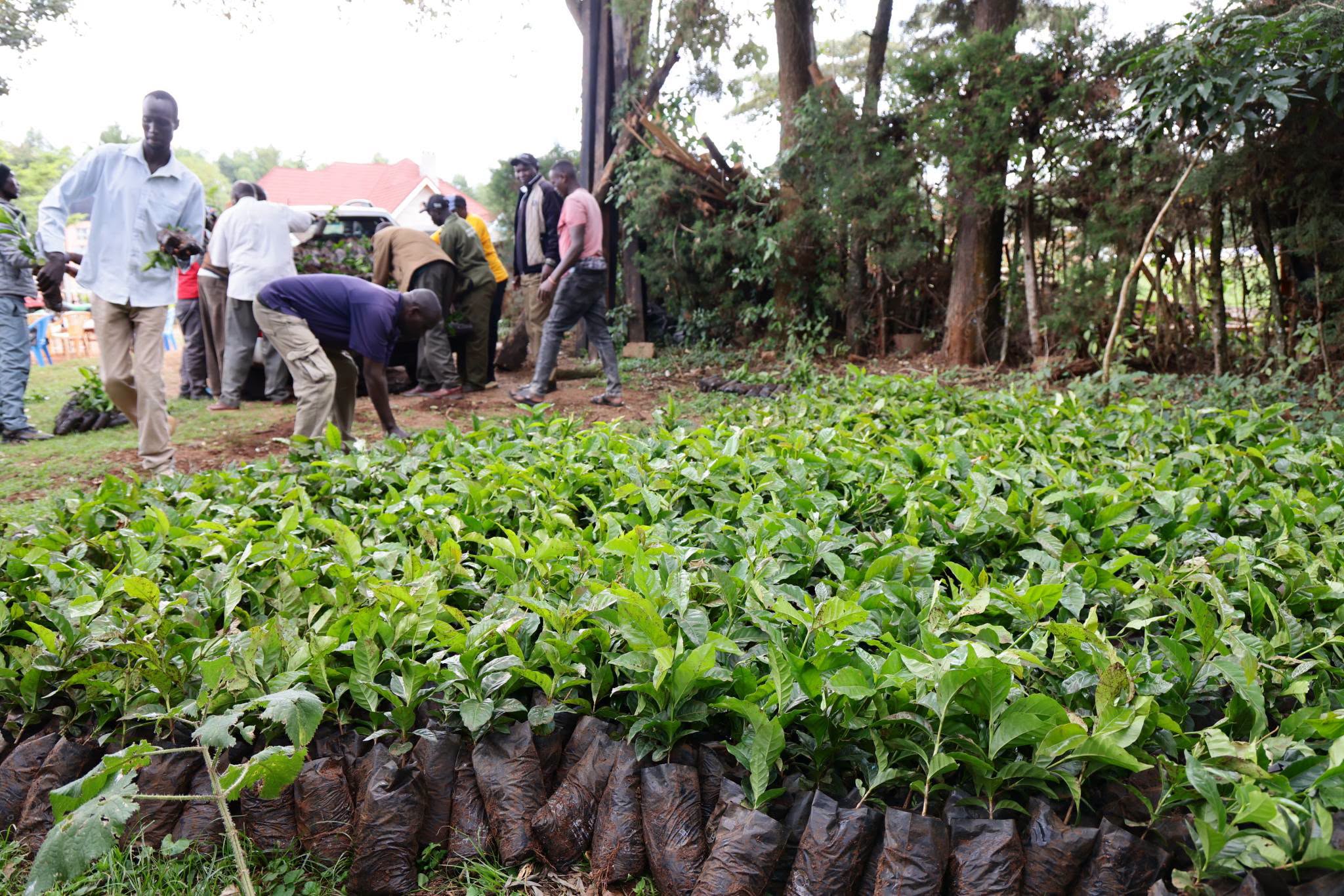
Similarly, efforts are underway to revive the cashew nut subsector through subsidised seedlings, expanded acreage, improved productivity and stronger value addition.
Cotton production more than doubles
Cotton has also emerged as a key pillar of the Coast’s agricultural revival. The area under production has grown from 8,000 hectares in 2022 to 18,000 hectares in 2026, while output has risen from 6,779 bales of 105kg each to 15,000 bales over the same period.
The Government is backing the subsector through Bt cotton, adequate seed supplies and improved coordination across the value chain.
Technology to drive transformation
Kagwe said technology and innovation will play a central role in the region’s transformation, with the Kenya Agricultural and Digital Information Centre (KADIC) positioned as a one-stop centre for agricultural digitalisation.
Public-private partnerships are expected to accelerate adoption of mechanisation, drone technology, animal identification and traceability, artificial intelligence and other digital tools aimed at lifting productivity and strengthening value chains.
Tanzania calls for deeper cross-border trade
The push to unlock the Coast’s potential comes as Tanzania encourages greater investment and cross-border cooperation in agriculture. Tanzania’s Deputy Minister for Agriculture, David Silinde, said Kenya and Tanzania share longstanding economic and social ties that should translate into deeper agricultural trade and investment within the East African Community.
Silinde pointed to opportunities in commercial agriculture, irrigation, seed production and multiplication, agro-processing and value addition, urging Kenyan investors to expand beyond traditional commodity trade.
YOU MIGHT HAVE MISSED:
AHB moves to reallocate homes to 300 sidelined Mukuru residents
He stressed that governments cannot transform agriculture alone and called for stronger private-sector participation, with governments focused on creating an enabling environment for investment, technology and innovation.
Milk supply pressure amid dry spell
The regional push for investment comes as climate-related disruptions strain food and livestock production. Kenya is currently facing a milk supply challenge linked partly to inadequate rainfall, which has reduced pasture and animal feed availability in key dairy-producing areas.
To ease the pressure, Kagwe said the Government will operationalise duty-free importation of yellow maize for animal feed production, a move aimed at lowering feed costs and addressing shortages.
He said restoring feed availability is critical to rebuilding milk production, while urging dairy cooperatives to ensure improved milk prices are passed on to farmers amid competition from brokers offering higher rates.
The Government is also weighing possible milk powder imports to cushion consumers, though Kagwe cautioned that any large-scale imports must be carefully timed against weather forecasts and the possibility of domestic production recovering once rains return.
By Benedict Aoya
Get more stories from our website: Sacco Review.
For comments and clarifications, write to: Saccoreview@
Kindly follow us via our social media pages on Facebook: Sacco Review Newspaper for timely updates
Stay ahead of the pack! Grab the latest Sacco Review newspaper!