
- Smart agriculture advocates push for technology to reach rural schools and farms
- Schools are proposed as practical demonstration centres for farmers and pupils
- Counties urged to redirect resources towards smart farming training and equipment
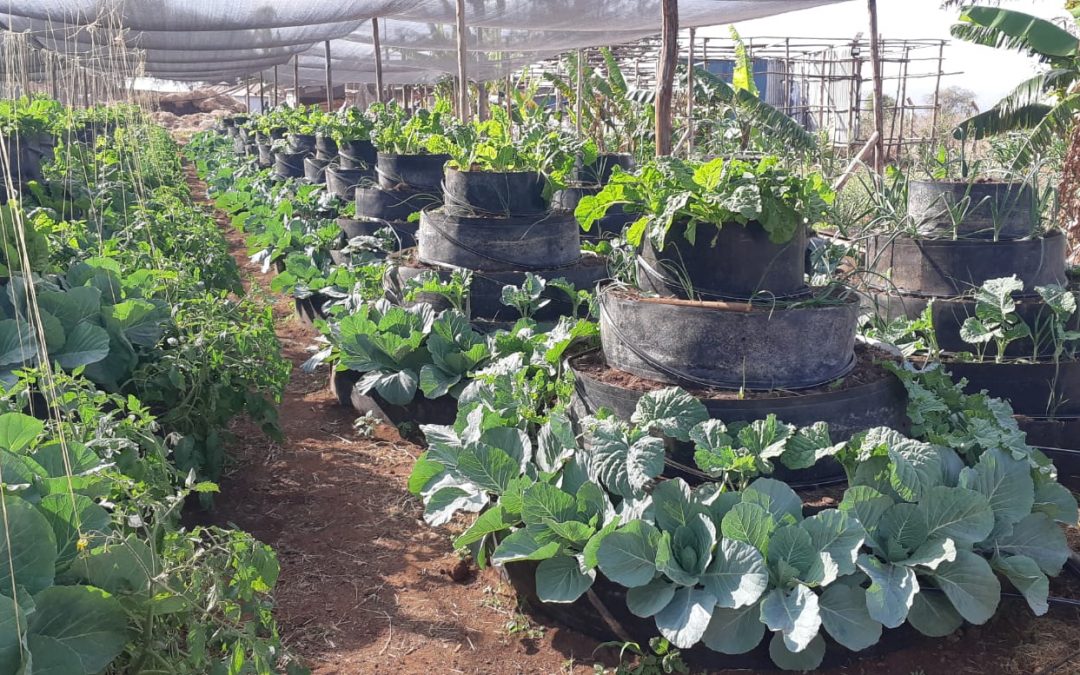
Smart agriculture is the use of simple technology, data and better farming methods to produce more food with less water, fewer chemicals and lower cost. It means using a soil moisture sensor to know when to irrigate instead of guessing. It means using a phone app to diagnose crop disease early, and using drip lines and small greenhouses to grow through dry seasons.
In Kenya, where drought recurs, fertiliser is costly and the population keeps growing, this is no longer a luxury for big farms. It is the surest route to food security. A smallholder with one acre in Suneka, Masimba or Keumbu can double his yield while spending less.
Yet for five years, we have discussed this solution in big hotels in Kisii, Kisumu and Nairobi. We gather thirty farmers, give them tea and a certificate, and send them home with a notebook full of English words they cannot implement. This approach has failed the rural farmer, and it must change. If we are serious about feeding Kenya, we must move smart agriculture from the hotel conference hall to the village shamba. The most effective vehicle for that move is our schools.
Every village has a school, and every homestead has a child in it. A parent may not trust a politician or an officer from town, but he trusts his child’s teacher. When a school farm shows a working drip line, a soil sensor that saves water, or a poultry house where chicks no longer die, parents will copy it the next morning without being pushed. That trust is exactly what extension services have lacked for years.
Therefore, the county governments of Kisii, Nyamira, Migori and Homa Bay, together with the national Ministry of Agriculture, should adopt a simple model: one school, one smart farm demonstration centre. Instead of spending Ksh 2 million on a workshop lasting three days for forty people in a hotel, the same money can install drip kits, tanks and sensors in ten primary schools. Training would then happen under a tree on the school farm, where farmers learn by touching, planting and seeing.
READ:
Delivery must change too. Hundreds of agriculture extension officers sit in sub-county offices writing reports that never reach the farmer. We should replace this with ward based smart agriculture champions. Each ward would recruit two youths, a young man and a young woman, and train them as sensor repairers, drone operators and poultry record keepers. With a motorbike and a monthly pay of Ksh 20,000 from the county climate fund, they would move from school to school and farm to farm. Soon, they would be known in every village as the fundi wa shamba smart.
Pupils can also serve as extension officers. Each school has an agriculture club of at least thirty pupils. Train them for one week to read a soil moisture sensor, use the PlantVillage app to diagnose maize disease and keep poultry records on a phone. Then assign each pupil ten homesteads around the school. One school alone would reach three hundred homes in one term, and within a year the whole county would be covered without hiring thousands of new staff.
Financing does not require donors. It requires reorganising what we already have. County governments should redirect at least thirty percent of the agriculture workshop and travel budget to school demonstration kits. The Ward Development Fund could allocate Ksh 500,000 per ward each year to equip 25 schools as centres.
Moreover, Kenya Agricultural and Livestock Research Organisation (KALRO) Kisii and Kisii University already have sensors and knowledge lying idle in laboratories. The county only needs to sign a memorandum of understanding with them, not a tender.
At the national level, the Agricultural Finance Corporation and the Hustler Fund should create a Smart Shamba Loan of Ksh 30,000 to Ksh 100,000, with a grace period of six months, so youth and women groups can buy drip lines, sensors and incubators. The Ministry of Education should also make a smart school garden part of Competency Based Curriculum (CBC) agriculture assessment, with Ksh 10,000 per school.
For the programme to succeed, five things are essential. First, farmers need one language and one tool. A single app translated into Ekegusii, Dholuo and Kiswahili, giving weather alerts, market prices and disease diagnosis, should become as common as M-Pesa. Second, we must demonstrate income, not technology. A rural farmer does not care about the internet of things. He wants to hear that an eighth acre plot gave Mama Moraa Ksh 45,000 in two months. Schools can write daily profits on a blackboard at the gate for all to see.
Third, we must include livestock. In Gusii, every home keeps chicken, so smart poultry with automatic drinkers, brooder sensors and record books is the natural start. When a mother sees chick mortality drop from fifteen percent to three percent, she will believe in the whole system.
IN CASE YOU MISSED IT:
Fourth, the county assembly must legislate a County Smart Agriculture Extension Act requiring every extension officer to maintain at least five school demonstration plots. Finally, we must celebrate rural champions, awarding the best smart farmer in each ward a water tank or drip kit on local radio, not a paper certificate.
The bottom line is clear. We cannot achieve food security while keeping agriculture in hotels and air conditioned offices. Food is grown in the village, in the rain and in the mud, and that is where technology must go.
If Kisii County turns its twelve hundred schools into smart farm centres within two years, it will feed Kisii, Migori and Nyamira, and sell to Nairobi. It will also create ten thousand jobs for youth as drone pilots, technicians and aggregators. The technology is here, the farmers are ready and the children are waiting. What we need now is the political will to leave the hotel and go to the shamba.
By Hillary Muhalya
Get more stories from our website: Sacco Review.
For comments and clarifications, write to: Saccoreview@
Kindly follow us via our social media pages on Facebook: Sacco Review Newspaper for timely updates
Stay ahead of the pack! Grab the latest Sacco Review newspaper!