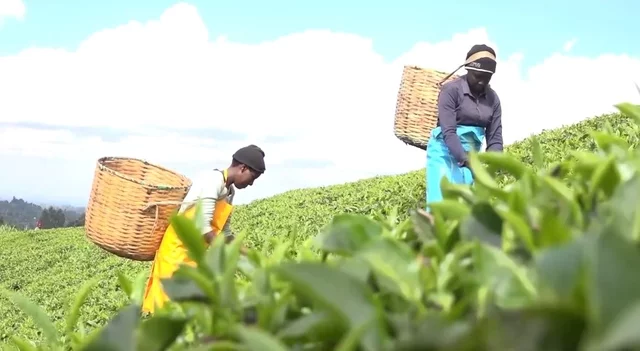
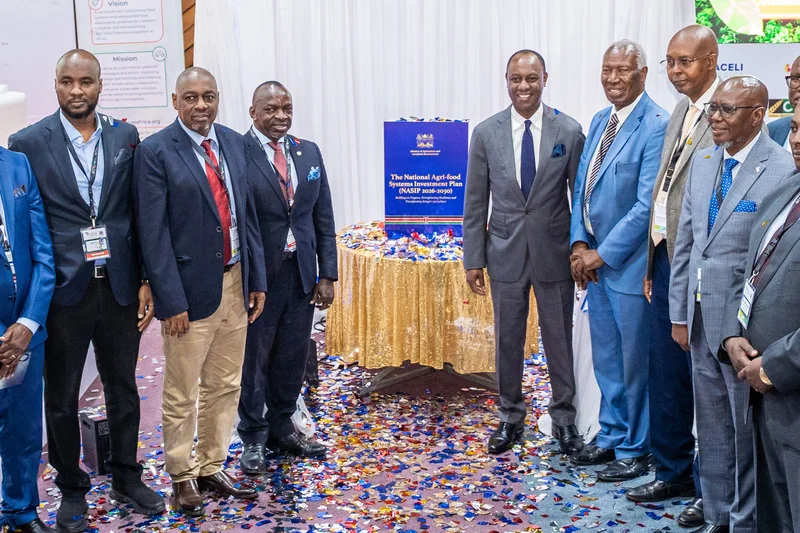
Kenya has unveiled a KSh1.081 trillion National Agri-food Systems Investment Plan (NASIP), a bold five-year blueprint designed to modernize agriculture, strengthen food security, and drive rural economic growth, covering the period 2026 to 2030.
The plan was officially launched during the opening of the Financing Agri Food Systems Sustainably (FINAS) Summit in Nairobi, marking a significant step in implementing the Agricultural Sector Transformation and Growth Strategy (ASTGS 2019–2029).
NASIP is structured to build resilient food systems, expand irrigation networks, modernize value chains, and create over two million jobs within five years. It also seeks to raise farmers’ incomes and position Kenya as a regional hub for sustainable agri-food investment.
Principal Secretary for Agriculture Jonathan Mueke emphasized that the plan is backed by a fully costed investment framework, with funding drawn from a blended model: 35 percent from national and county governments, 45 percent from the private sector, and 20 percent from development and bilateral partners. He urged county governments to play a more proactive role in ensuring the plan’s success.
The FINAS Summit also spotlighted Africa’s broader agricultural transformation agenda, particularly the accelerated rollout of the Comprehensive Africa Agriculture Development Programme (CAADP) Kampala Declaration. Delegates noted that the continent is entering a crucial phase of the 2026–2035 CAADP strategy, which prioritizes agro-industrialisation, climate resilience, regional trade, and inclusive governance of food systems.
ALSO READ:
Rice production to surge as Bunyala Irrigation Project reaches 62 pc completion
Held under the theme “Towards Sustainable Financial Architecture for Africa’s Food Systems,” the summit brought together policymakers, financiers, development partners, and private sector leaders to explore blended finance models, climate-smart investment pathways, and innovative agricultural financing solutions. Case studies from Kenya, Nigeria, and Ethiopia were presented, showcasing practical approaches to funding agricultural transformation.
Summit Director Charity Mutegi highlighted that the forum aims to move beyond dialogue to concrete action, including the creation of a private sector-led agriculture finance working group to mobilize more investment. Participants also drew on tools such as the Food and Agriculture Organisation’s MAFAP expenditure reviews and the World Bank–IFAD 3FS framework to identify financing gaps and improve capital flows into agri-food systems.
International partners underscored the importance of collaboration in driving agricultural transformation, while experts stressed the need for inclusive, climate-smart financing models that support smallholder farmers and agricultural MSMEs.
By Masaki Enock
Get more stories from our website: Sacco Review.
For comments and clarifications, write to: Saccoreview@
Kindly follow us via our social media pages on Facebook: Sacco Review Newspaper for timely updates
Stay ahead of the pack! Grab the latest Sacco Review newspaper!