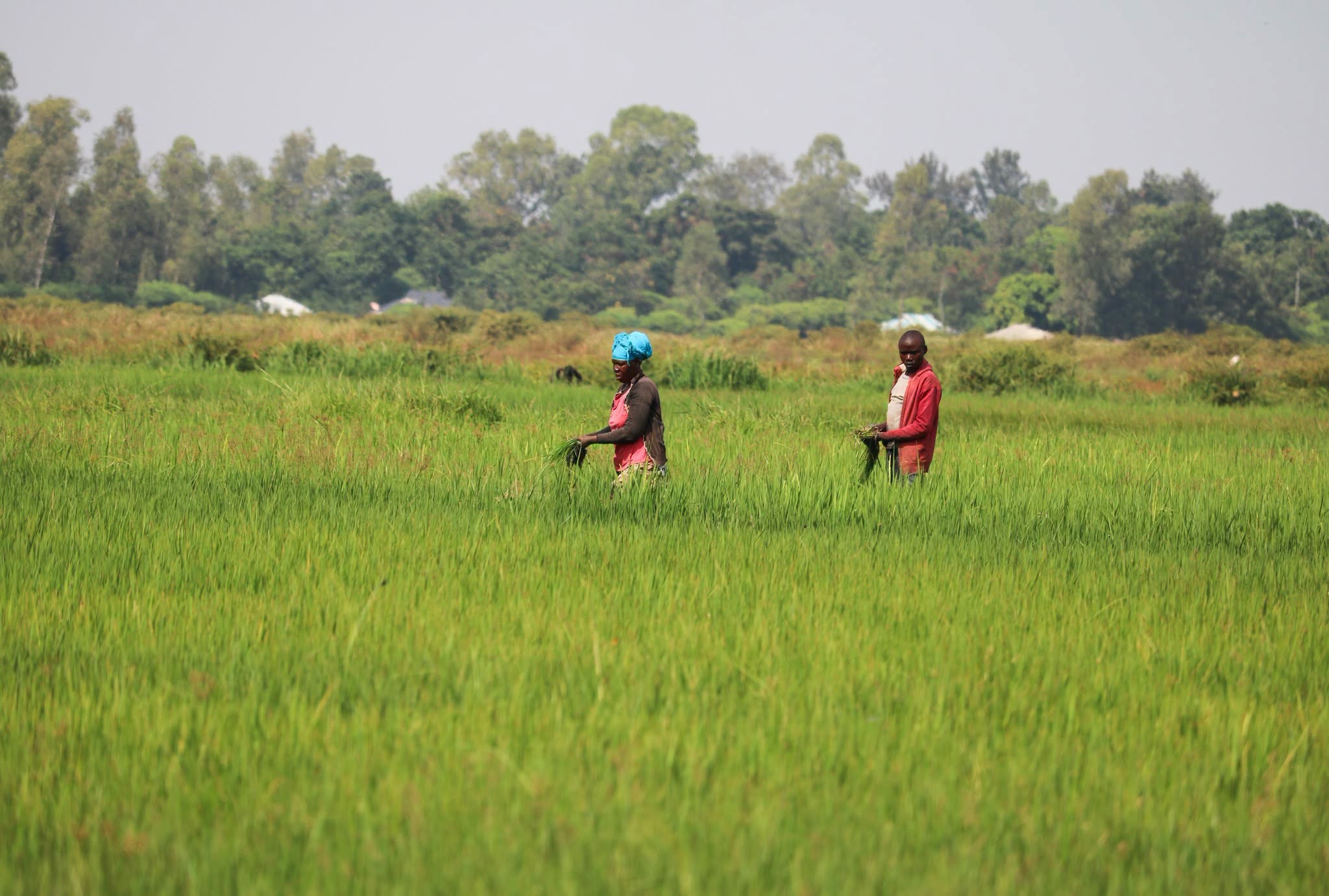
Kenya’s drive to enhance food production and strengthen national food security is set to gain momentum, with the expansion of the Bunyala Irrigation Scheme under the Lower Nzoia Irrigation Project now 62 per cent complete.
Principal Secretary for Internal Security and National Administration Raymond Omollo said the government is making significant investments in production agriculture, describing the sector as a key pillar of the Bottom-Up Economic Transformation Agenda.
He said the ongoing expansion seeks to open up more land for irrigation, boost agricultural productivity, and enhance the livelihoods of thousands of farmers in Busia and Siaya counties.
Omollo noted that the Bunyala Irrigation Scheme, established in 1969, has expanded remarkably from a 540-acre pilot project to more than 3,200 acres currently under cultivation. The scheme now benefits over 14,000 farmers, with rice remaining its principal crop.
The PS said the project currently produces an average of 10,000 metric tonnes of rice annually, with farmers growing popular varieties such as Kwamboka, Super, Rice Gold and IR rice.
He noted that the expansion is part of the government’s broader strategy to increase the country’s irrigated acreage, boost local rice production, and reduce reliance on imports by strengthening domestic production capacity.
ALSO READ:
Matungulu MCA urges boda boda riders to pursue technical training
“The Government continues to invest heavily in production agriculture as a key pillar of the Bottom-Up Economic Transformation Agenda, strengthening food security, creating jobs and boosting rural incomes,” said the PS.
Omollo said the project has undergone significant infrastructure upgrades aimed at improving efficiency and lowering operational costs.
He explained that the irrigation scheme has shifted from a pump-fed system to a gravity-fed model that draws water directly from River Nzoia. According to the PS, the transition has enhanced the reliability of water supply while substantially reducing irrigation-related expenses.
He added that the upgraded infrastructure is expected to boost agricultural production by enabling more land to be brought under irrigation.
Omollo further stated that the government has invested in post-harvest handling systems to reduce losses and enhance farmers’ access to markets.
He explained that farmer-managed drying and storage facilities have strengthened the agricultural value chain by improving grain quality and connecting producers to markets both locally and across the East African region.
ALSO READ:
RUPSA Sacco Pushes for KUSCCO Insolvency over KSh17.7 billion liabilities
The PS said the State Department for Internal Security and National Administration continues to play a critical role in supporting the project’s implementation by coordinating national government functions at the grassroots level.
He noted that the department promotes community engagement, facilitates stakeholder consultations, and helps maintain a stable and secure environment essential for smooth project implementation and sustained agricultural production.
By Frank Mugwe
Get more stories from our website: Sacco Review.
For comments and clarifications, write to: Saccoreview@
Kindly follow us via our social media pages on Facebook: Sacco Review Newspaper for timely updates
Stay ahead of the pack! Grab the latest Sacco Review newspaper!