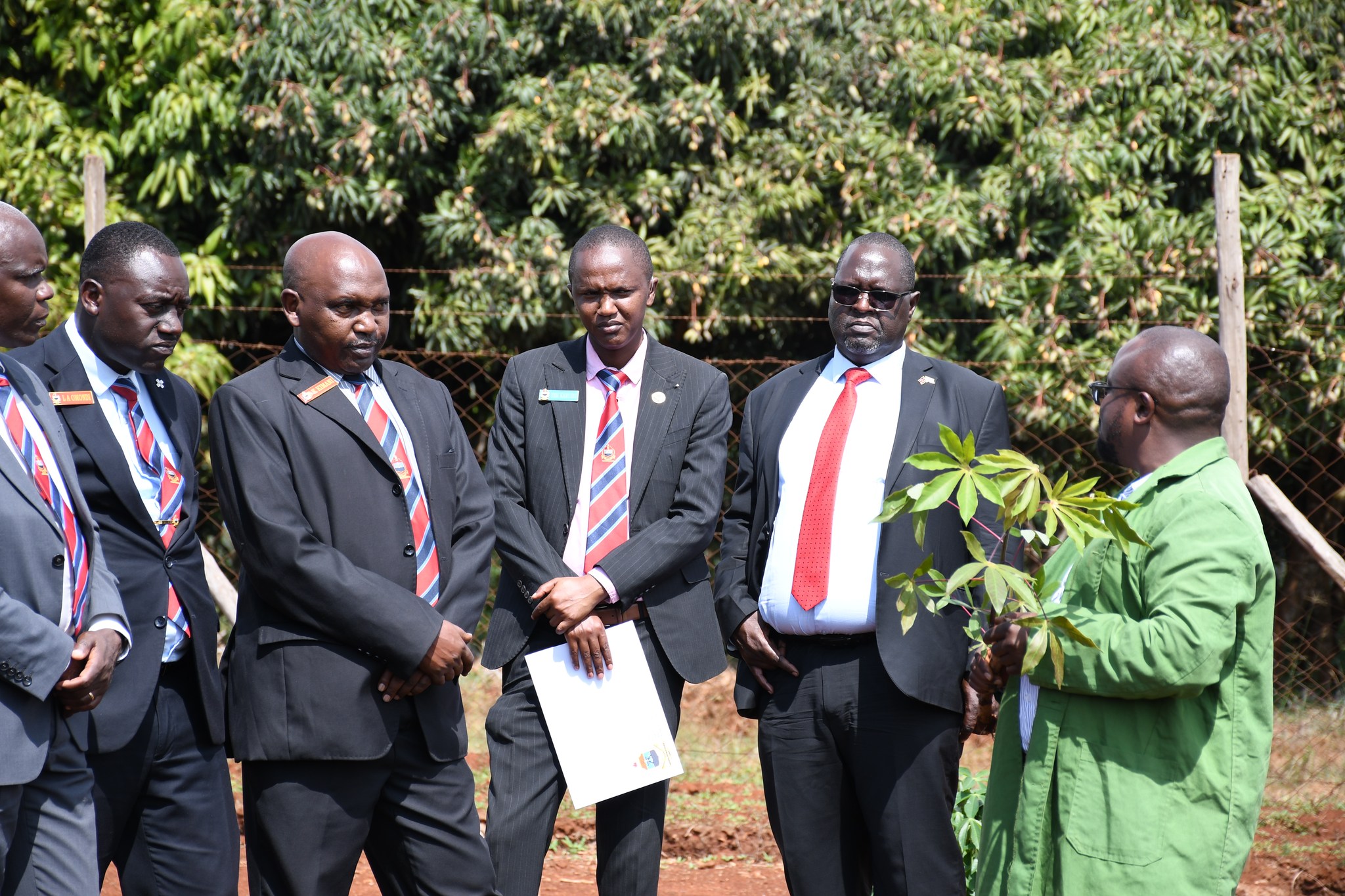
The National Biosafety Authority (NBA) has announced that Kenya has successfully completed National Performance Trials (NPTs) for genetically modified (GM) cassava, paving way for the commercialization.
According to NBA, the disease-resistant cassava varieties are engineered to resist Cassava Brown Streak Disease (CBSD), which causes browning and malformation of edible roots.
Some varieties are also drought-tolerant, aimed at boosting yields and improving food security.
The trials were conducted in Mtwapa, Kandara, and Alupe, ahead of full commercial release in Kenya and Uganda.
NBA Acting Director of Technical Services Josphat Muchiri compared the GM cassava rollout to Bt cotton, commercialized in 2020, currently covering about 10,000 acres across Eastern, Central, Western, and Nyanza regions.
He also referenced Bt maize, approved for commercialization in 2025, though commercialisation is pending due to ongoing High Court Conservatory orders.
“Bt maize is genetically modified to resist stalk borers and fall armyworm pests, while Bt cotton resists the cotton bollworm.
Similarly, GM cassava resists CBSD, GM soya-bean tolerates herbicides, and drought-tolerant maize withstands water stress,” Muchiri explained.
ALSO READ:
Kenya, IFAD initiate Ksh 600 million EU funded program to boost soil health, agriculture
He also highlighted GM animals globally, such as GM mosquitoes in the USA and Brazil, Glo fish for ornamental purposes, and GM salmon in the USA and Canada, illustrating international adoption of biotechnology.
Muchiri further revealed that research and development on GMOs in Kenya is ongoing at KALRO, International Livestock Research Institute (ILRI), Kenyatta University, ICIPE, and Masinde Muliro University of Science and Technology.
The NBA’s mandate now extends to biosecurity, which is considered a matter of national security.
A review of the National Security Biosafety Act is underway to cover emerging technologies such as genome editing, synthetic biology, and gene-drive technologies, which may pose security risks.
“NBA conducts border patrols at key entry points to prevent unauthorised GMOs from entering the country,” Muchiri said.
“We also perform quarterly market and intelligence-based surveillance in shops and agro-dealers to monitor and manage biological products circulating within Kenya.”
The NBA is responsible for supervising and controlling the transfer, handling, and use of GMOs to ensure the safety of human and animal health and protect the environment.
The successful completion of the NPTs is a major milestone for Kenya’s biotechnology sector, opening the path for commercialization of GM cassava that promises higher yields, disease resistance, and enhanced food security for farmers and consumers.
By Juma Ndigo
Get more stories from our website: Sacco Review.
For comments and clarifications, write to: Saccoreview@
Kindly follow us via our social media pages on Facebook: Sacco Review Newspaper for timely updates
Stay ahead of the pack! Grab the latest Sacco Review newspaper!