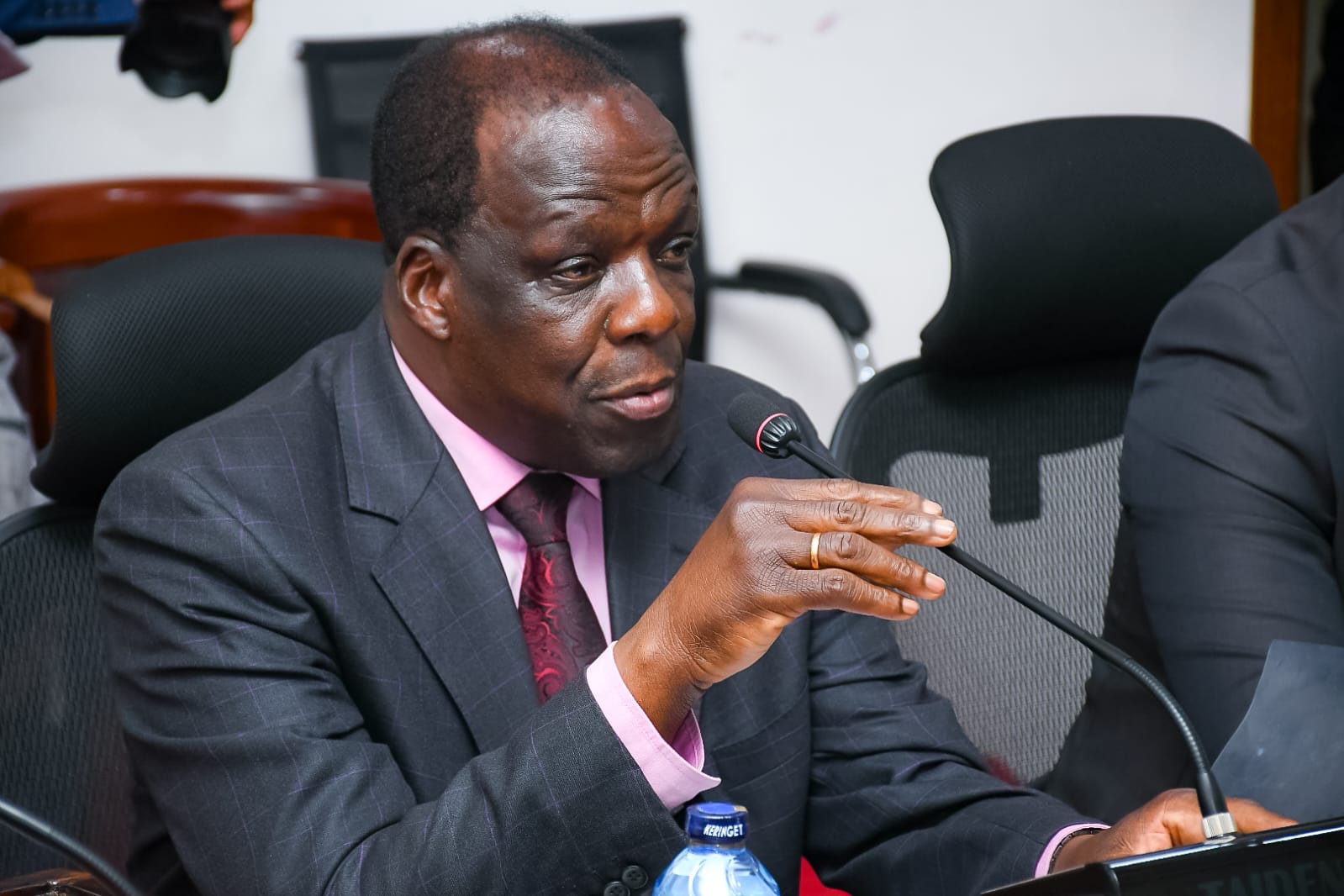
Cabinet Secretary for Co-operatives and MSME Development Wycliffe Oparanya has assured the Senate that the Government is accelerating reforms in the Savings and Credit Cooperative (SACCO) sector in a bid to strengthen governance, safeguard members’ savings, and restore public confidence in cooperative financial institutions.
Appearing before the Senate Standing Committee on Trade, Industrialisation, and Tourism, chaired by Issa Boy Juma, Oparanya said the Ministry had embarked on comprehensive legal, institutional, and policy reforms aimed at addressing persistent challenges affecting the cooperative movement.
The Cabinet Secretary appeared alongside Principal Secretary for the State Department for Co-operatives Patrick Kilemi to brief senators on the progress of ongoing SACCO reforms, the status of Metropolitan National SACCO, and recovery efforts involving Kenya Union of Savings and Credit Co-operatives (KUSCCO).
Oparanya told the committee that the reforms are anchored on the Sessional Paper No. 4 of 2020 on the National Co-operative Policy as well as the proposed Co-operatives Bill, 2024, both of which seek to modernise and strengthen the cooperative sector.
ALSO READ:
Mwalimu National Sacco signs MoU with KNCCI to extend affordable credit to SMEs, informal sector
According to the CS, the reforms are intended to improve governance standards, enhance oversight of SACCOs, and reinforce the mandate of the Sacco Societies Regulatory Authority (SASRA) to ensure stronger supervision and protection of members’ funds.
Among the major reforms being pursued are the establishment of a SACCO Deposit Guarantee Fund to cushion members against financial losses, a Central Liquidity Facility to support financial stability within the sector, a SACCO Stabilisation Fund, and a Shared Services Platform to improve efficiency among cooperatives. The Ministry is also pushing for the digitisation of the cooperative registry system to improve transparency and accountability.
Oparanya noted that the reforms are aimed at protecting depositors while ensuring that the SACCO movement remains resilient, transparent, and financially stable amid growing public concern over governance failures in some cooperative institutions.
On the troubled Metropolitan National SACCO, the Cabinet Secretary told senators that recovery and accountability processes were still underway through legal, administrative, and investigative mechanisms.
He disclosed that investigations by the Directorate of Criminal Investigations (DCI) are ongoing, while surcharges have already been issued against individuals implicated in financial irregularities within the SACCO. He added that related disputes and recovery matters are also being handled before the Co-operative Tribunal in line with the law.
The CS further updated the committee on efforts to stabilise the Kenya Union of Savings and Credit Co-operatives following concerns raised after a forensic audit and the reconstruction of the organization’s financial records.
Oparanya acknowledged that the recovery process remains complicated due to the scale of financial challenges facing the institution, but maintained that notable progress had been made through governance reforms, verification of claims, cost-cutting measures, debt restructuring, asset recovery initiatives, and legal interventions.
ALSO READ:
Kenya Highlands Sacco announces internship opportunity for young graduates
He revealed that some SACCOs and affected members had already received partial refunds under the ongoing recovery programme, signalling gradual progress in efforts to compensate those affected by the financial crisis.
The Government, he said, remains committed to ensuring accountability for individuals implicated in financial mismanagement while intensifying efforts to recover lost funds and restore integrity within the cooperative movement.
Oparanya emphasised that the reforms are critical in shielding the SACCO sector from future financial crises and rebuilding public trust in cooperative institutions, which continue to play a central role in Kenya’s economic growth, financial inclusion, and empowerment of millions of wananchi.
By Felix Wanderi
Get more stories from our website: Sacco Review.
For comments and clarifications, write to: Saccoreview@
Kindly follow us via our social media pages on Facebook: Sacco Review Newspaper for timely updates
Stay ahead of the pack! Grab the latest Sacco Review newspaper!