
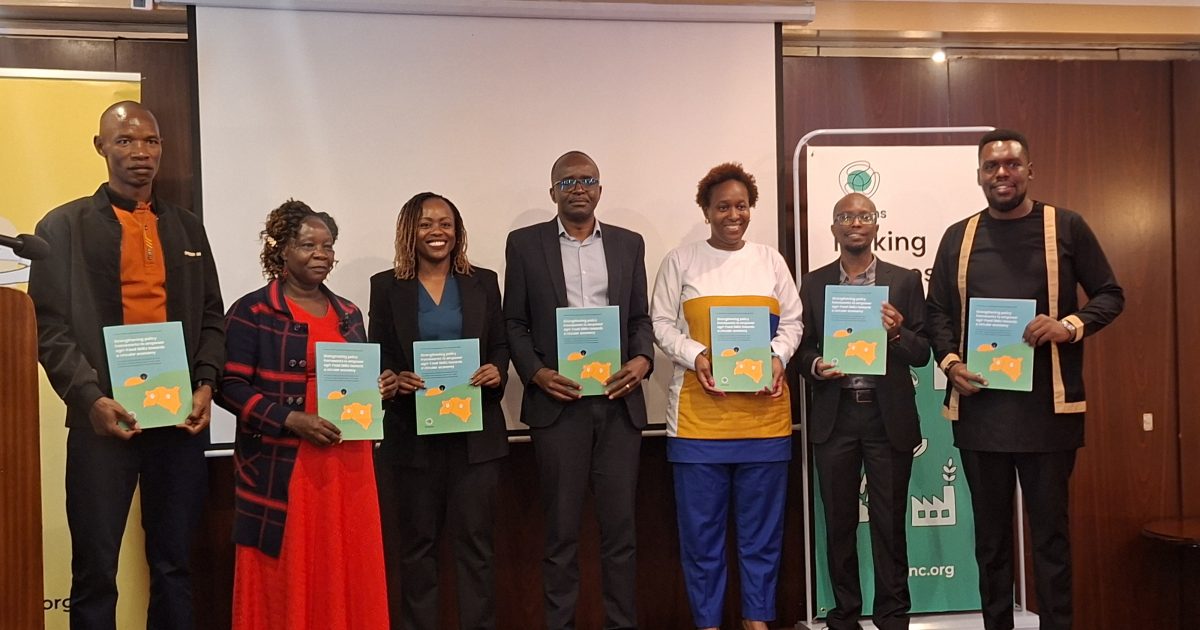
The government has rolled out a new policy brief aimed at positioning small‑ and medium‑sized enterprises (SMEs) at the center of Kenya’s transition toward a circular economy in the agri‑food sector.
The document, dubbed “Strengthening policy frameworks to empower agri-food SMEs towards a circular economy in Kenya”, developed by the Ministry of Agriculture and Livestock Development evaluates national progress in policy formulation while underscoring the barriers that continue to hinder SME participation.
According to ministry official Alice Nyaga, the brief provides a dual perspective: highlighting advances in policy development while acknowledging the practical challenges that remain. “It highlights both the advances made in national policy development and the practical challenges that continue to limit the participation of SMEs in the circular economy transition,” she explained.
Nyaga noted that SMEs face several critical obstacles, including limited access to finance, inadequate exposure to appropriate technologies, and the burden of complex certification and regulatory requirements. These barriers, she said, must be addressed if SMEs are to fully contribute to sustainable food systems.
ALSO READ:
Molo dairy farmers urged embrace modern farming techniques to boost production
The policy brief comes against the backdrop of Kenya’s recent legislative milestones. Beryl Oyier, country director at the Bopinc Innovation Center, pointed to frameworks such as the Sustainable Waste Management Act of 2022, the Extended Producer Responsibility Regulations of 2024, and the Green Economy Strategy as evidence of progress in creating an enabling environment.
However, Oyier cautioned that many SMEs, particularly those embedded in local food systems and community‑based value chains, still struggle to access these frameworks in practice. She emphasized that bridging the gap between policy and implementation will be critical to ensuring inclusivity in the circular economy transition.
The policy brief sets out a series of recommendations to accelerate SME participation in the circular economy. Among them are expanding access to tailored financing by engaging financial institutions on the business case for circular economy enterprises, scaling awareness among consumers and policymakers through targeted campaigns, product labelling, and strategic messaging, and raising SME awareness of existing policies and standards to ensure they can take full advantage of the enabling frameworks already in place.
By Masaki Enock
Get more stories from our website: Sacco Review.
For comments and clarifications, write to: Saccoreview@
Kindly follow us via our social media pages on Facebook: Sacco Review Newspaper for timely updates
Stay ahead of the pack! Grab the latest Sacco Review newspaper!