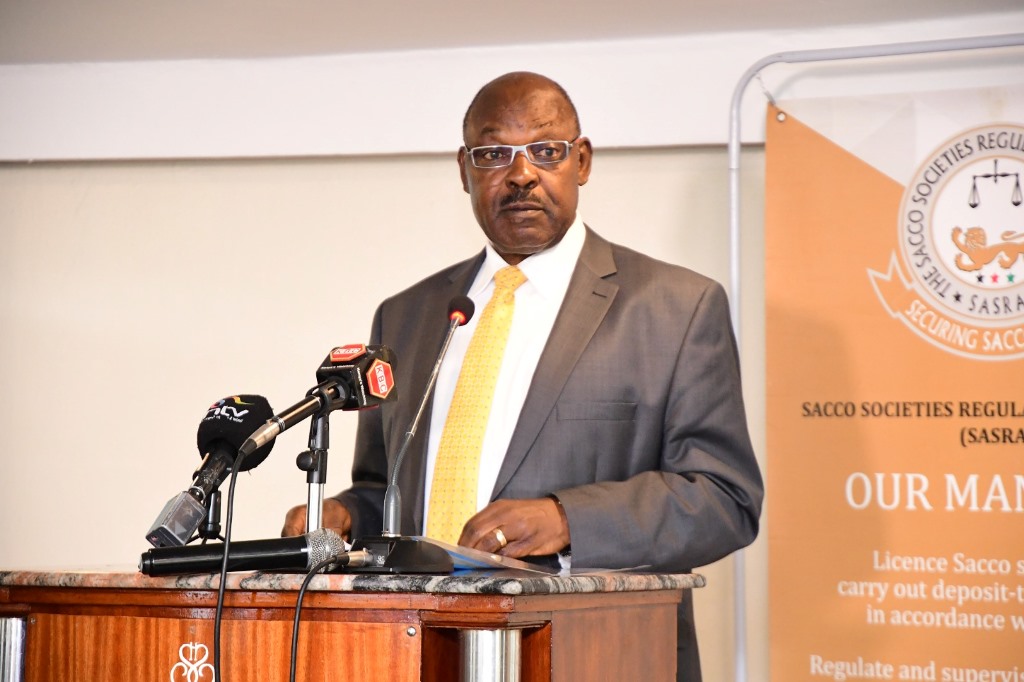
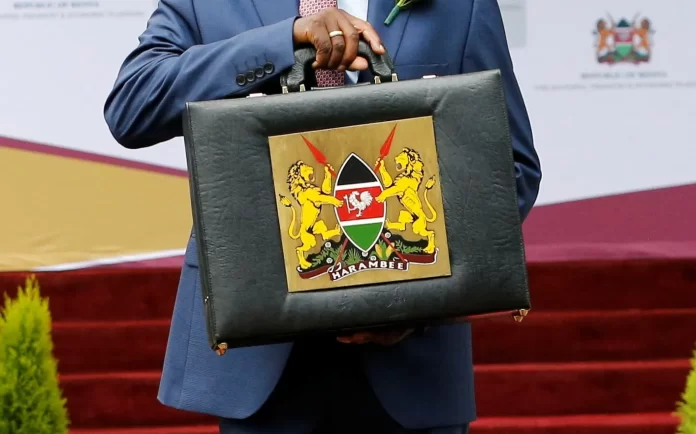
One of the biggest disappointments when Treasury Cabinet Secretary John Mbadi read the budget a was ignoring employees’ Pay As You Earn (PAYE) demands.
In several public participation forums across the country, workers and private sector umbrella bodies had lobbied the government to at least zero-rate income for earners below Ksh 30,000 to combat shrinking take-home pay, raising it from the current Ksh24,000.
President William Ruto has toyed with the idea, giving Kenyans hope that their diminished payslips might get a reprieve, but employees were shocked when Mbadi completely sidestepped the proposal.
In parliament, there was hope that MPs would save Kenyans from the claws of the Treasury. But parliamentarians went the government’s way. Members of Parliament rejected the public push to lower Pay As You Earn, opting to maintain the status quo, with top tax rates at 33–35 percent.
Lawmakers and Treasury officials have emphasised the government’s delicate balancing act: managing massive public debt while facing pressure to provide tax relief amid the high cost of living.
Leader of the Majority in Parliament Kimani Ichungwa roared fervently when he asserted that Kenya is not ready for a PAYE overhaul.
“We can only bring the PAYE issue as a different tax proposal far from the Finance Bill at a later date; not now,” Ichungwa said.
ALSO READ:
Ruto announces plan to boost coffee pay-outs to Ksh300 per kilo
Ichungwa complements Mbadi’s claims that “looking at the 2026/27 budget, there is nothing to cut.”
Views that have been countered by Kiharu MP Ndidi Nyoro: “Kenyan workers who are relieved of the PAYE burden can actually end up contributing more to the economy,” said Nyoro.
Nyoro’s assertions have been supported especially by experts in the financial sector who are conversant with the cooperative movement.
According to Ken Gichinga, the Chief Economist at Mentoria Economics, lowering Pay As You Earn boosts Savings and Credit Cooperative Organizations primarily by increasing members’ disposable income. When employees retain a larger portion of their earnings, it creates a powerful ripple effect throughout the cooperative ecosystem.
“With higher take-home pay, members can comfortably increase their monthly deposits, share capital, and voluntary savings without compromising their ability to meet daily living expenses,” he said.
At the same time, under labour laws, such as the two-thirds rule, total statutory and loan deductions cannot exceed 66.7 per cent of an employee’s salary. Higher net pay allows members to easily qualify for larger or additional development and emergency loans.
Consequently, Saccos generate the majority of their income through the interest paid on member loans. Increased borrowing capacity and better repayment rates directly translate to stronger profit.
Saccos were not alone in pushing for lower PAYE rates; the Kenya Bankers Association (KBA) and the Institute of Certified Public Accountants of Kenya (ICPAK) heavily advocated for broader, across-the-board cuts.
They had proposed a flat 5 per cent reduction across all PAYE brackets, including dropping the top tax rate from 35 percent to 30 per cent, which they argued would inject much-needed liquidity into the economy and stimulate growth.
ICPAK too had actively pushed to slash the top PAYE tax rate from 35 percent to 28-30 percent and restructure the current system into simplified brackets of 10, 15, 20, 25, and 30 percent.
“Individuals face higher maximum PAYE rates, up to 35 percent, compared to the 30 percent corporate tax rate, which contradicts tax fairness policies,” opined ICPAK.
“PAYE reforms must be mooted to increase take-home pay, stimulate domestic demand, and align Kenya’s tax framework with regional peers.”
ALSO READ:
Sacco lending to farmers surges to 23 per cent as CBK reveals shifting credit trends
The Kenya Bankers Association had proposed reducing the PAYE burden to restore the purchasing power of salaried Kenyans. The bankers’ lobby advocated for a minimum tax-free income threshold of Ksh 30,000 per month and capping the highest PAYE rate at 30 percent.
KBA Chief Executive Officer Raimond Molenje said reducing PAYE would inject up to Ksh 42 billion immediately in Gross Domestic Product (GDP) output through household consumption.
He further explained that it would unlock as much as Ksh 140 billion in lending capacity for households and businesses as credit health and loan repayments improve.
“It will also ultimately boost VAT and excise duty collections to offset any initial revenue loss by the government,” he explained.
By Mwiti Mukunga
Get more stories from our website: Sacco Review.
For comments and clarifications, write to: Saccoreview@
Kindly follow us via our social media pages on Facebook: Sacco Review Newspaper for timely updates
Stay ahead of the pack! Grab the latest Sacco Review newspaper!