
President William Ruto has unveiled an ambitious government plan aimed at boosting coffee farmers’ earnings from the current Ksh158 per kilogramme to between Ksh250 and Ksh300 over the next few years.
The initiative forms part of a wider strategy by the government to revitalise and transform Kenya’s coffee sector.
Speaking in Kianyaga, Kirinyaga County, during the launch of a coffee revival programme, President Ruto said his administration had made considerable strides in boosting earnings for coffee farmers, but emphasised that further interventions were necessary to restore the crop’s profitability.
The President observed that when his government assumed office, coffee farmers were receiving as little as Ksh50 to Ksh60 per kilogramme, a situation that had discouraged many producers and led to a decline in coffee production.
“When we came to office, one kilogramme of coffee would earn a farmer Ksh 50, Ksh 60 or thereabout. But today, let us speak the truth: one kilo earns the farmer much more,” said the Head of State.
Ruto, however, said that the government is not satisfied with the current returns and has developed a comprehensive plan aimed at significantly raising farmers’ incomes.
“I called this meeting because we are not there yet. More things are coming. This price, in the near future, God willing, will rise to Ksh250 per kilo to even Ksh300. We have a plan to achieve this,” he said.
Ruto said the government plans to boost the coffee sector by supplying farmers with improved coffee seedlings, upgrading processing factories and expanding access to international markets, measures aimed at increasing farmers’ earnings from the crop.
ALSO READ:
Sacco lending to farmers surges to 23 per cent as CBK reveals shifting credit trends
“Every seedling that will be planted, every factory that will be modernised, every change and every new market that we will open must add to the income of farmers,” said Ruto.
President Ruto stressed that coffee farmers deserve higher earnings, noting that they shoulder the heaviest responsibility in the production value chain.
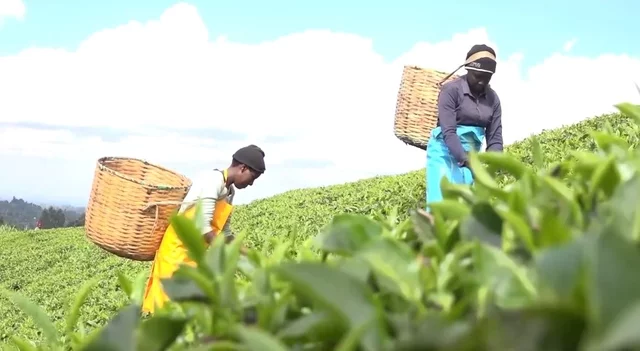
“The reason is that it is the farmer who tills the land, plants the seedlings, cares for the trees and harvests and carries the heaviest weight. He should be the one who benefits the most and not brokers,” said the President.
The Head of State also pointed to reforms aimed at streamlining payment systems in the coffee sector. He noted that farmers previously endured long delays before receiving their earnings, with payments often taking months to be processed. He added that numerous deductions and limited transparency within the system had significantly reduced farmers’ returns.
“Before, payments were delayed, there were many deductions and there was no transparency. This demoralised farmers and hurt the coffee subsector. Today we are opening a new chapter,” said Ruto.
President William Ruto announced that the government is targeting a threefold increase in the country’s coffee production, from the current 50,000 tonnes per year to 150,000 tonnes by 2028.
He said the goal will be realised through the rollout of improved coffee varieties, increased adoption of modern farming technologies and the expansion of acreage dedicated to coffee cultivation.
He noted that coffee cultivation has already spread to 34 counties, with the government targeting an additional 100,000 acres for coffee production as part of efforts to boost the sector.
ALSO READ:
Governor Otuoma pledges overhaul of Busia cooperatives to restore confidence and growth
The President also committed to reducing production costs by lowering the prices of fertilisers, herbicides and pesticides. He said the interventions would enhance farmers’ earnings and attract more Kenyans to venture into coffee farming.
Coffee farmers in Kenya currently earn between Sh110 and Sh160 per kilogramme of coffee cherries, with payments occasionally rising to Sh200 depending on processing quality and prevailing market prices.
The government’s ongoing reforms seek to guarantee farmers more stable and improved earnings while revitalising the coffee sector and restoring its status as one of Kenya’s top cash crops.
By Frank Mugwe
Get more stories from our website: Sacco Review.
For comments and clarifications, write to: Saccoreview@
Kindly follow us via our social media pages on Facebook: Sacco Review Newspaper for timely updates
Stay ahead of the pack! Grab the latest Sacco Review newspaper!