
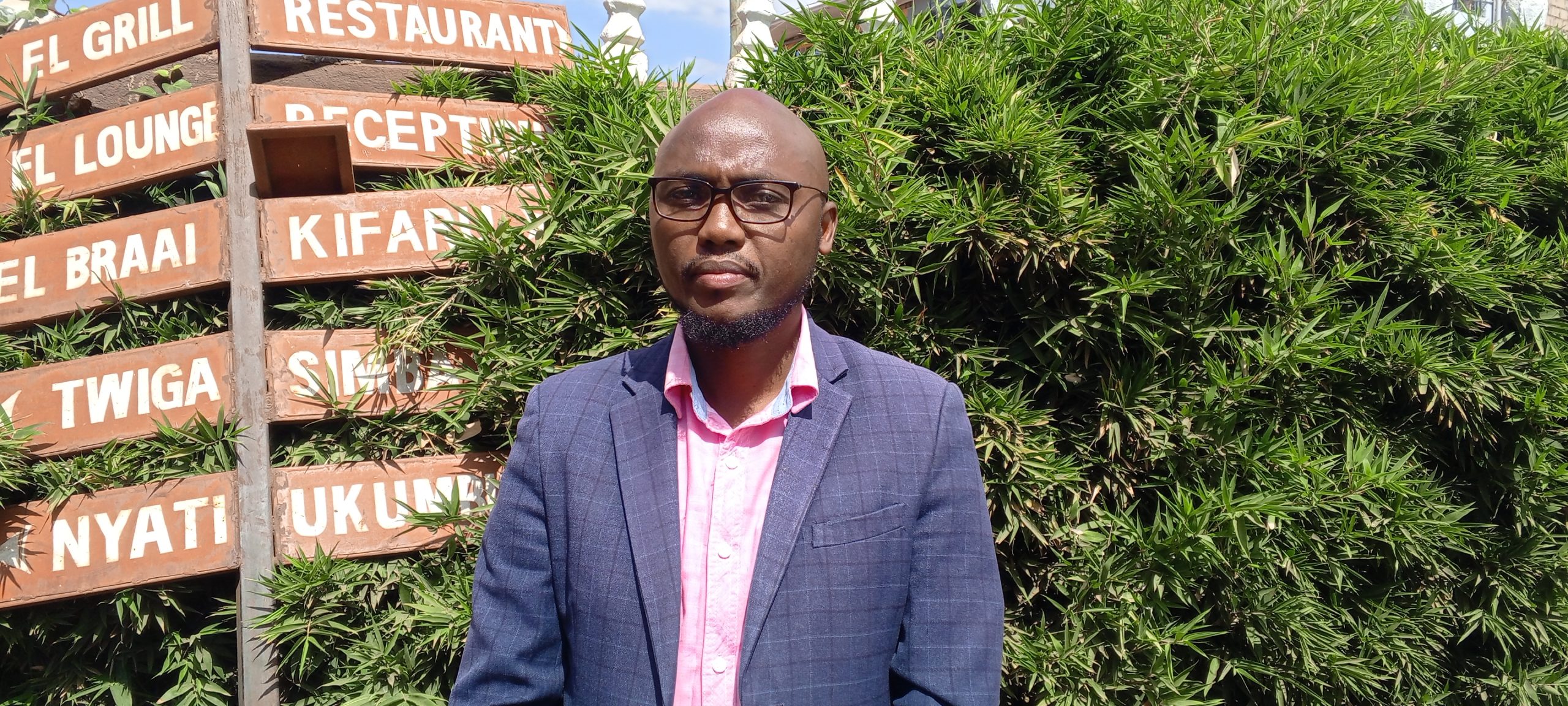
An economist and opinion leader from Meru has urged Kenyans to back Vision 2060 fully, saying the plan is viable and aligns with the African Union’s Agenda 2063.
Erick Mutwiri said President William Ruto’s recent launch of the vision was a welcome move by the national government, meant to place Kenya at par with its African peers. He said he was looking forward to its implementation.
Mutwiri, who is eyeing the North Imenti parliamentary seat in 2027, said the country had opened a new chapter in its development planning.
“We are almost done with Vision 2030, and we are looking forward to Vision 2060,” he said.
He explained that the constitution had already laid out laws to guide public management within such a framework, and that the new vision would help counties anchor their development plans on a shared national direction.
“It will guide devolved units to anchor their plans in the national vision,” Mutwiri said.
With Vision 2030 set to lapse in three years, Mutwiri said its successor needed to align closely with both Africa’s Agenda 2063 and the global Sustainable Development Goals (SDGs), which guide 153 member states of the United Nations.
He added that although Kenya was heading into a general election in 2027, the country still needed a midterm plan anchored on a clear national vision.
“If we don’t prepare and have the vision now, we will have a challenge,” he said.
READ ALSO:
Mutwiri said Vision 2030 had carried the aspiration of transforming Kenya into a newly industrialising, upper middle income economy. However, he questioned how much of that ambition had translated into real impact for ordinary citizens.
“I was keen to listen, and the chairman said they have achieved their target by 61.6 percent. But the question is the impact there,” he said.
According to his analysis, of the three pillars underpinning Vision 2030, political, social and economic, it is the economic pillar that has fallen furthest behind.
He pointed to the 2010 constitution, which created devolved units, as a major success for the political pillar, even though the country had yet to move fully from personality and tribal based politics to issue based politics.
On the social front, he noted that Kenya had not achieved free universal education from nursery to higher learning institutions, as had been envisioned.
The economic pillar, he said, had underperformed the most. Vision 2030 had targeted annual economic growth of 10 percent, but the country had instead averaged about 4 percent.
“There is still a lot that needs to be done,” Mutwiri said.
Mutwiri was keen to stress that the conversation around Vision 2060 should not be tied to any individual leader.
“It’s not a conversation about President William Ruto or the regime that is there right now, but about the progress of the country, and it’s the right time to talk about it,” he said.
He identified corruption as the single biggest obstacle standing in the way of Kenya achieving its national visions, past and present.
As an example, he cited Meru county, where an operational airport in Isiolo could have created jobs and opened new routes for farm produce to reach markets across the world.
By John Majau
Get more stories from our website: Sacco Review.
For comments and clarifications, write to: Saccoreview@
Kindly follow us via our social media pages on Facebook: Sacco Review Newspaper for timely updates
Stay ahead of the pack! Grab the latest Sacco Review newspaper!