
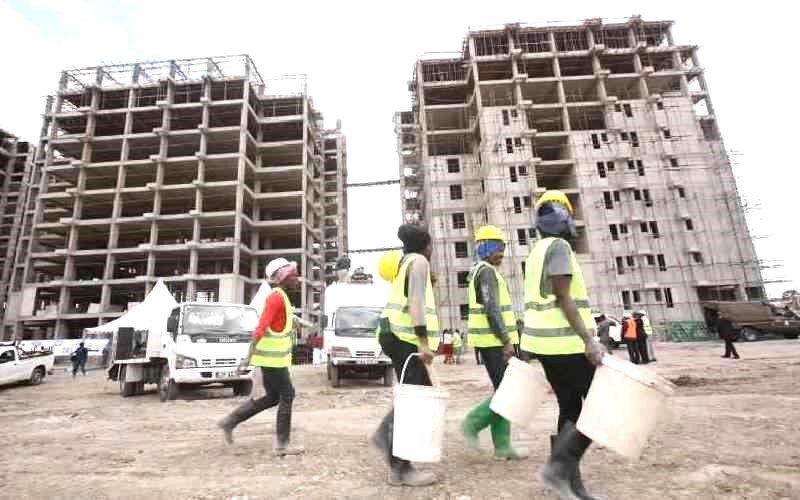
- Kenya’s construction labour costs rose by 4.38% between the first and second quarters of 2026, driven by growing demand for skilled workers.
- Carpenters, painters, welders, and mechanics recorded the biggest wage increases, reflecting a shortage of skilled artisans across the sector.
- Rising labour costs, alongside higher prices for building materials, transport, and fuel, continue to increase the overall cost of construction in Kenya.
The construction industry in Kenya is currently paying higher wages for its skilled workforce, with recorded data showing a steady increase in pay for artisans and construction workers since 2025 due to strong demand for specialised skills.
According to the Kenya National Bureau of Statistics (KNBS), the current Construction Input Indices show that labour costs have increased across almost every category of construction workers past June 2026, highlighting the rising value of skilled artisans even as developers adapt to higher building costs.
KNBS reported that the overall construction labour index increased by 4.38 per cent between the first and second quarters of 2026, reflecting rising labour costs across the sector.
The biggest wage increases were recorded among carpenters, painters, welders, and mechanics, whose labour index rose by 7.51 per cent, highlighting growing demand for skilled artisans and the increasing cost of construction labour.
READ ALSO:
Marsabit Governor backs Gumi Saku Miraa Sacco fund drive for women traders
The figures indicate that contractors are offering higher wages to attract and retain skilled artisans amid growing demand across infrastructure, commercial, and residential construction projects.
As multiple developments compete for a limited pool of qualified workers, labour costs have increased, adding to overall construction expenses and reflecting the widening skills gap in Kenya’s building industry.
The costs have been rising since 2025. The overall construction labour index increased from 111.90 in the first quarter of 2025 to 117.49 in the second quarter of 2026.
Labour costs increased by 2.36 per cent in the building sector during the quarter, lifting the labour index to 119.31.
KNBS attributed the increase to higher wages for masons and foremen, watchmen, plumbers, electricians, and casual workers. The building labour index has risen steadily from 115.62 in the first quarter of 2025, highlighting the continued rise in labour costs over the past 18 months.
Labour cost pressures were even more evident in the civil engineering sector, where the labour index rose by 6.40 per cent during the second quarter of 2026.
Carpenters, painters, welders, and mechanics recorded the steepest wage increase at 14.29 per cent, followed by watchmen and related workers at 7.01 per cent, machine and plant operators at 6.93 per cent, and casual labourers at 6.08 per cent.
The wage increases come as the construction industry continues to contend with rising prices of building materials, transport, and fuel. Unlike these input costs, which fluctuate with market conditions, labour costs have maintained a steady upward trend since 2025, underscoring sustained demand for skilled artisans and persistent labour shortages in Kenya’s construction sector.
By Bernard Magada
Get more stories from our website: Sacco Review.
For comments and clarifications, write to: Saccoreview@
Kindly follow us via our social media pages on Facebook: Sacco Review Newspaper for timely updates
Stay ahead of the pack! Grab the latest Sacco Review newspaper!