
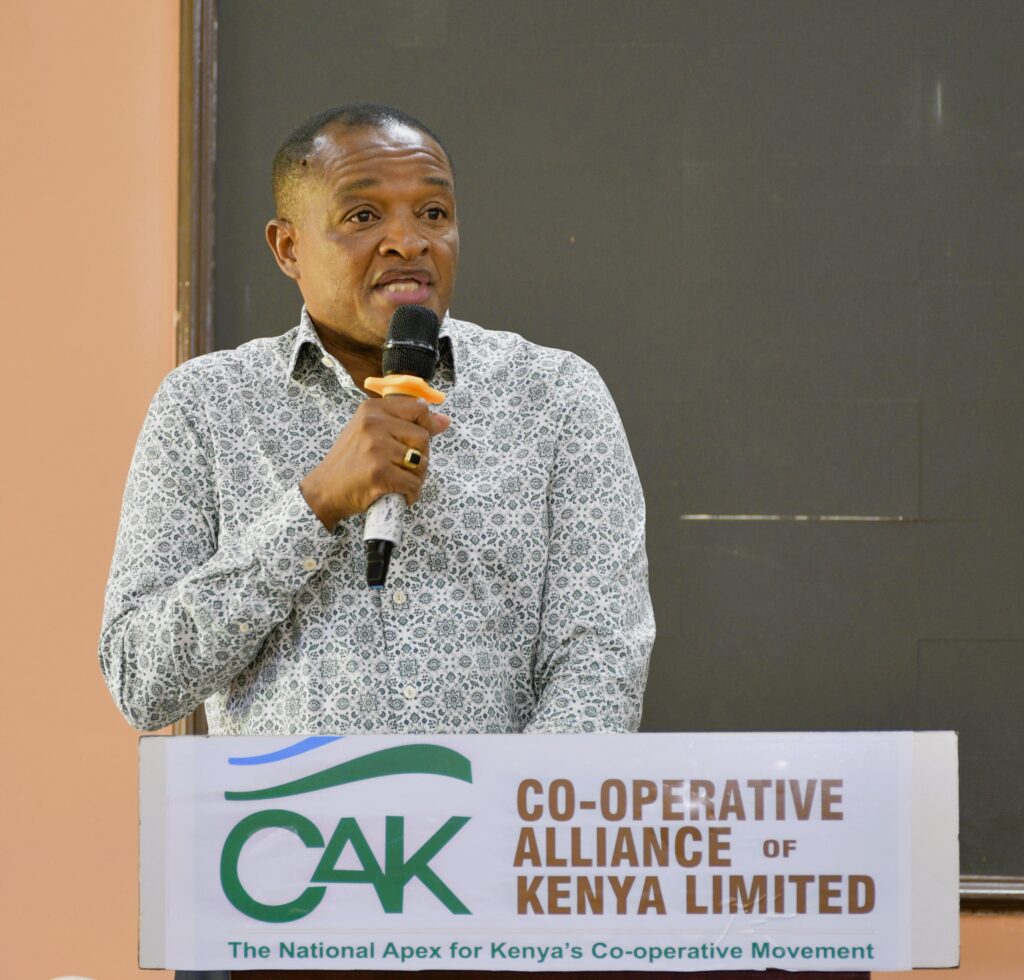
- The Sacco movement recorded strong growth in 2025, with regulated assets rising to KSh1.21 trillion, membership surpassing 7.8 million, and Kenya ranked ninth globally in Sacco membership, making it Africa’s leading cooperative economy.
- Gov’t reforms, including the Sacco Societies (Amendment) Bill 2025, propose a Central Liquidity Facility, deposit guarantee fund, stricter registration rules, and mandatory digital reporting to enhance governance, protect deposits, and ensure long‑term sustainability of the cooperative sector.
Co-operators across Kenya will join the rest of the world in celebrating International Co-operative Day 104, (Ushirika Day) today, under the global theme “Co-operatives for a Peaceful World.”
The national celebrations will be held in Nairobi, alongside county events across the country, highlighting the role of co-operatives in promoting sustainable development, democratic governance, economic inclusion, and peaceful societies. The theme aligns with United Nations Sustainable Development Goal (SDG) 16 on peace, justice, and strong institutions.
The co-operative movement has a long history. The earliest recorded co-operative dates back to March 14, 1761, in Scotland, while the modern co-operative movement traces its roots to 1844, when 28 artisans in Rochdale, northern England, established the first modern cooperative enterprise.
Today, co-operatives are recognized as key drivers of inclusive economic growth and employment, providing jobs and work opportunities to about 280 million people, equivalent to 10 per cent of the world’s employed population.
According to the World Council of Credit Unions (WOCCU) 2024 Statistical Report, there are 67,137 credit unions serving more than 412.6 million members across 101 countries, with assets valued at KSh490.2 trillion (US$3.8 trillion) and a global penetration rate of 11.2 per cent.
The WOCCU report ranked Kenya ninth globally in Sacco membership and the leading co-operative movement in Africa, consistently ranking between seventh and eleventh worldwide in co-operative penetration, assets, and membership. It is also the only African country ranked among the world’s top 15 Sacco economies.
The sector continued to record strong growth in 2025. According to the Sacco Societies Regulatory Authority (SASRA), total assets of regulated Saccos rose to Ksh1.21 trillion in December 2025 from Ksh1.08 trillion the previous year.
The sector now has more than 7.4 million members and contributes over 30 per cent of Kenya’s Gross Domestic Product (GDP).
The Kenya National Bureau of Statistics (KNBS) Economic Survey 2025 released recently also shows steady growth in the Sacco sector. Total assets of deposit-taking Saccos increased by 11.5 per cent to Ksh727.1 billion, while credit to the private sector rose by 13.4 per cent to Ksh847 billion.
ALSO READ:
Members urged to safeguard cooperative movements by electing credible leaders
Overall sector assets grew by 12.4 per cent to Ksh1.21 trillion, with loans, deposits, capital reserves, and investment income all registering significant growth. Membership increased by 5.7 per cent to 7.8 million, while the number of regulated Saccos rose to 357, with branches increasing from 652 to 669.
The government has also undertaken major reforms to strengthen the co-operative sector. In a proposed legislative framework the Sacco Societies (Amendment) Bill 2025, the National Government jointly with co-operative sector actors plans to establish the Central Liquidity Facility (CLF) and a deposit guarantee fund.
Through the bill the State plans to tighten regulation by enhancing capacity regulation of SASRA in addition to making digital reporting mandatory.
The Bill, developed through extensive public participation, is currently before Parliament.
In April 2025, the Ministry of Co-operatives appointed a Committee of Experts on Co-operatives, chaired by Marlene Shiels, to review the Sacco Societies Act, 2008, and recommend reforms. The committee later presented its Report on the Transformation of the Sacco System in Kenya to President Ruto, proposing a five-pillar roadmap focusing on governance, deposit protection, digitization, financial inclusion, and institutional sustainability.
The report identified several challenges facing the sector, including weak liquidity management, the absence of deposit protection mechanisms, fragmented service delivery, inadequate digital infrastructure, and governance weaknesses.
It found that political interference by some Sacco boards, poor corporate governance, and weak county-level registration requirements had contributed to the growth of financially unsustainable Saccos operating with limited regulatory oversight, exposing members’ savings to potential risks.
To address these challenges, the committee recommended amendments to the Sacco Societies Act, 2008, including the establishment of a Central Liquidity Fund and a Sacco Deposit Guarantee Fund to safeguard members’ deposits.
Other proposals include introducing a Stabilization Protection Scheme, enforcing a mandatory code of corporate governance, harmonizing Sacco operations, and encouraging mergers among financially weak institutions.
ALSO READ:
Nyeri cooperatives honoured for excellence and strong member returns at 2026 Ushirika Day
Following the review, the Ministry of Co-operatives lifted the suspension on the registration of new Saccos in June 2026 after introducing stricter registration requirements.
Commissioner for Co-operatives David Obonyo said the new framework is intended to strengthen sustainability, accountability, and good governance within the sector.
Under the new rules, applicants seeking to register a Sacco must establish a fully equipped physical office with at least one employee, demonstrate a minimum institutional capital of Ksh1.2 million excluding member deposits, submit a three-year business plan with cash flow projections, and show the capacity to mobilize at least Ksh10 million in deposits within the first year. Applications will continue to be submitted through County Directors for Co-operatives.
The new measures are expected to enhance the stability, integrity, and long-term sustainability of Kenya’s Sacco sector while strengthening public confidence in cooperative societies.
By Obegi Malack
Get more stories from our website: Sacco Review.
For comments and clarifications, write to: Saccoreview@
Kindly follow us via our social media pages on Facebook: Sacco Review Newspaper for timely updates
Stay ahead of the pack! Grab the latest Sacco Review newspaper!